
CODAPAK
Thick Product Filling Line: How to Reduce Splashing When Filling Sauce
For ketchup and other thick sauces, stopping a bottle before dosing can cause movement and splashing. We look at how the four-head FTPfill machine moves containers along the conveyor during filling and what supports its design.
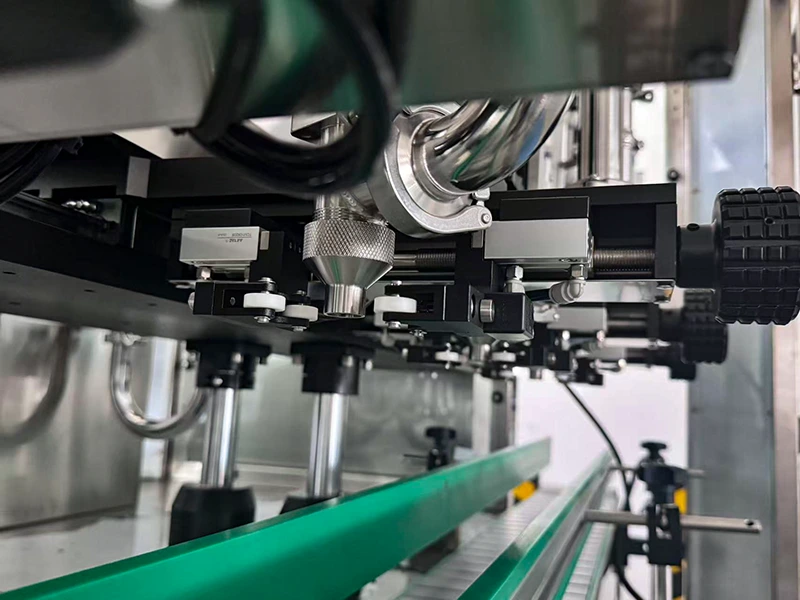
FTPfill is designed for four-head piston dosing of thick food products while containers move continuously. Suitability for a specific sauce, bottle, and line operating mode requires a separate assessment.
Questions covered
- 01
- Why can thick sauce splash during filling with container stops?
- 02
- How does tracking moving containers work, and what meters the product?
- 03
- Which parameters and details should be checked before selecting a machine for ketchup filling?
When stopping the bottle interferes with sauce filling
On a sauce filling line, the bottle is first stopped for positional filling and then started again. When it starts moving, the thick product may slosh and splash, making the fill level less stable. For ketchup and other paste-like products, this is a reason to consider filling without stopping the container.
FTPfill does not replace tomato preparation, pasteurization, capping, or labeling. It is a metering and filling machine; adjacent operations are designed separately.
Four filling heads track containers on the conveyor
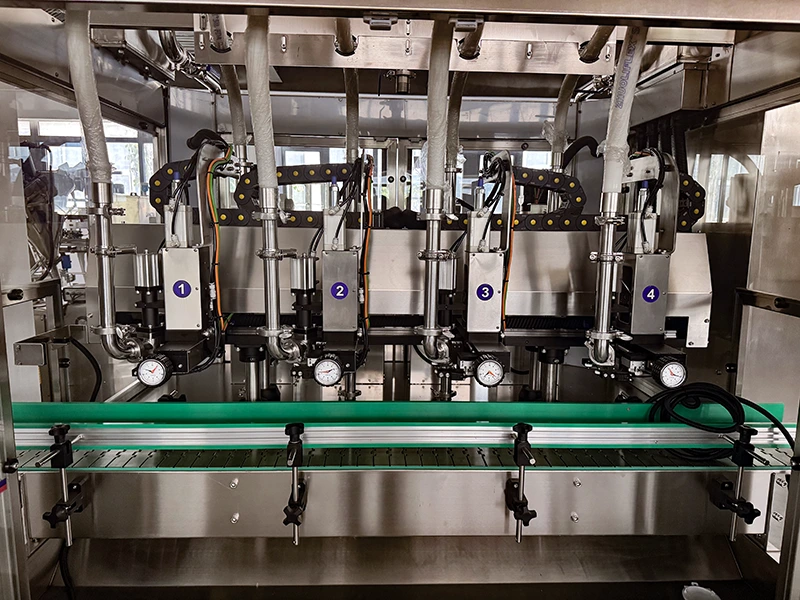
During the cycle, containers continue moving along the chain conveyor. Four metering heads move in sync with them and fill without stopping at a fixed position. According to the described operating principle, this mode helps keep the product surface more stable and reduce splashing; the specific result depends on the product and line settings.
The image shows an overall view of the machine, including the conveyor area and main filling unit. It confirms the layout but is not video evidence of the line in operation.
Piston filler: product intake and delivery cycle
In the FTPfill, the volumetric cycle is performed by four piston dosing units: first, product is drawn into the dosing chamber, then delivered through a valve to the filling nozzle. A servo drive controls the piston stroke according to set parameters, rather than using air pressure fluctuations to move the piston.
For the four-head version, the series specification lists a dosing volume of 50–1000 ml and a speed of 40–50 bottles per minute. These values should be checked against the configuration and the specific product conditions; dosing accuracy is not stated in the available materials.
What to check before integrating into a line for filling thick products
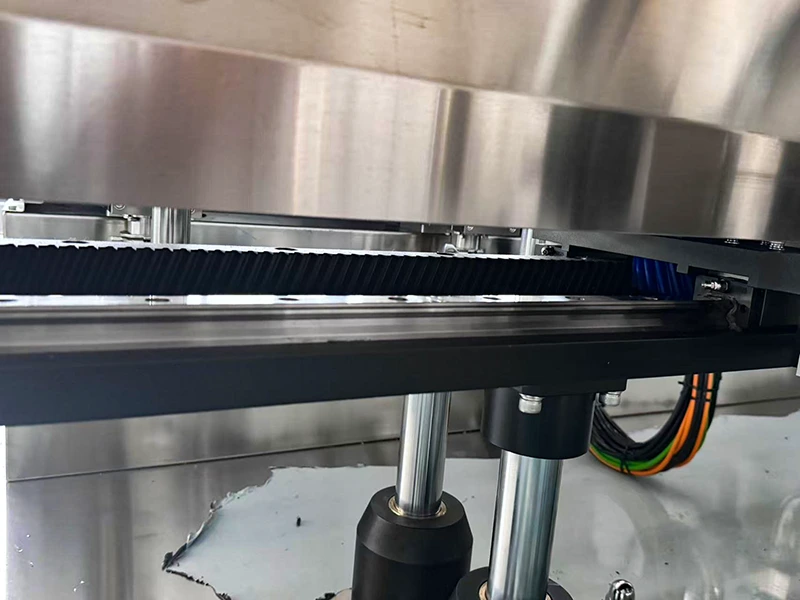
Before selecting an industrial thick-sauce filler, agree on the container type and geometry, required volume, product properties, and the pace of adjacent equipment. Gripper and guide adjustments are provided for format changes, while the unit height and interchangeable nozzles help align delivery with the container neck; changeover time is not specified.
The design specifies a 304 stainless steel frame, transparent protective doors, and quick-release pipeline connections. The presence of detachable connections alone does not confirm a CIP process or sanitary cleaning parameters, so the cleaning procedure must be agreed separately.
Application boundary
FTPfill is a four-head machine for piston dosing and filling. It does not prepare tomato raw materials or perform pasteurization, capping, or labeling. Available materials do not specify dosing accuracy, the upper viscosity limit, verified throughput for a specific sauce, changeover time, or a confirmed CIP cycle.
Discuss filling your sauce
Provide the product type, container, and required fill volume to discuss the suitability of a four-head piston doser and the configuration of adjacent line operations.