
Line process

From container infeed and filling to case packing and palletizing, view equipment for every stage.

These 15 stages cover container infeed, filling, closing, labeling, case packing, and palletizing for automation, line extension, and adding new products to an existing end-of-line. Existing interfaces determine the actual project scope.

Existing machines can remain in the current process combination. Nameplates, conveyor heights, layout, and continuous-running material confirm interfaces with added stages.

Process equipment and site interfaces

The filling side follows product and pack; the end-of-line follows cases, pallets, and warehouse flow.

Filling side

Configure filling-side equipment and handoff stages from empty-container infeed to finished accumulation

Container infeed, rinsing, filling, capping, labeling, and accumulation can be combined for the project; the container, product, target, and existing interfaces determine the stages covered.
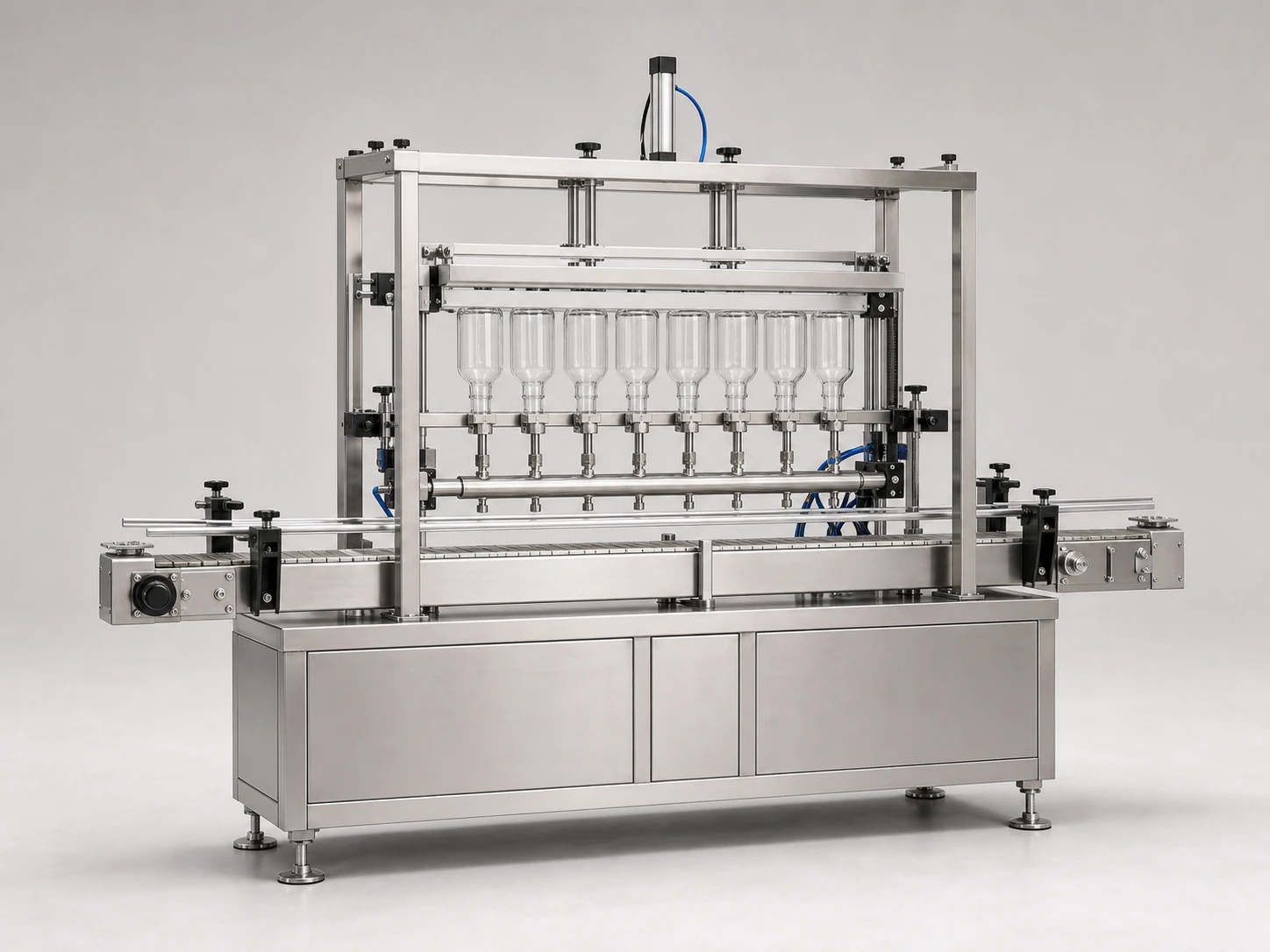
Configure filling-side equipment and handoff stages from empty-container infeed to finished accumulation

End-of-line

Configure end-of-line equipment for cases, pallets, and warehouse handoff

Use the real case, pack pattern, case weight, pallet pattern, pallet, and warehouse rate to connect case erecting, packing, sealing, palletizing, and full-pallet transfer.

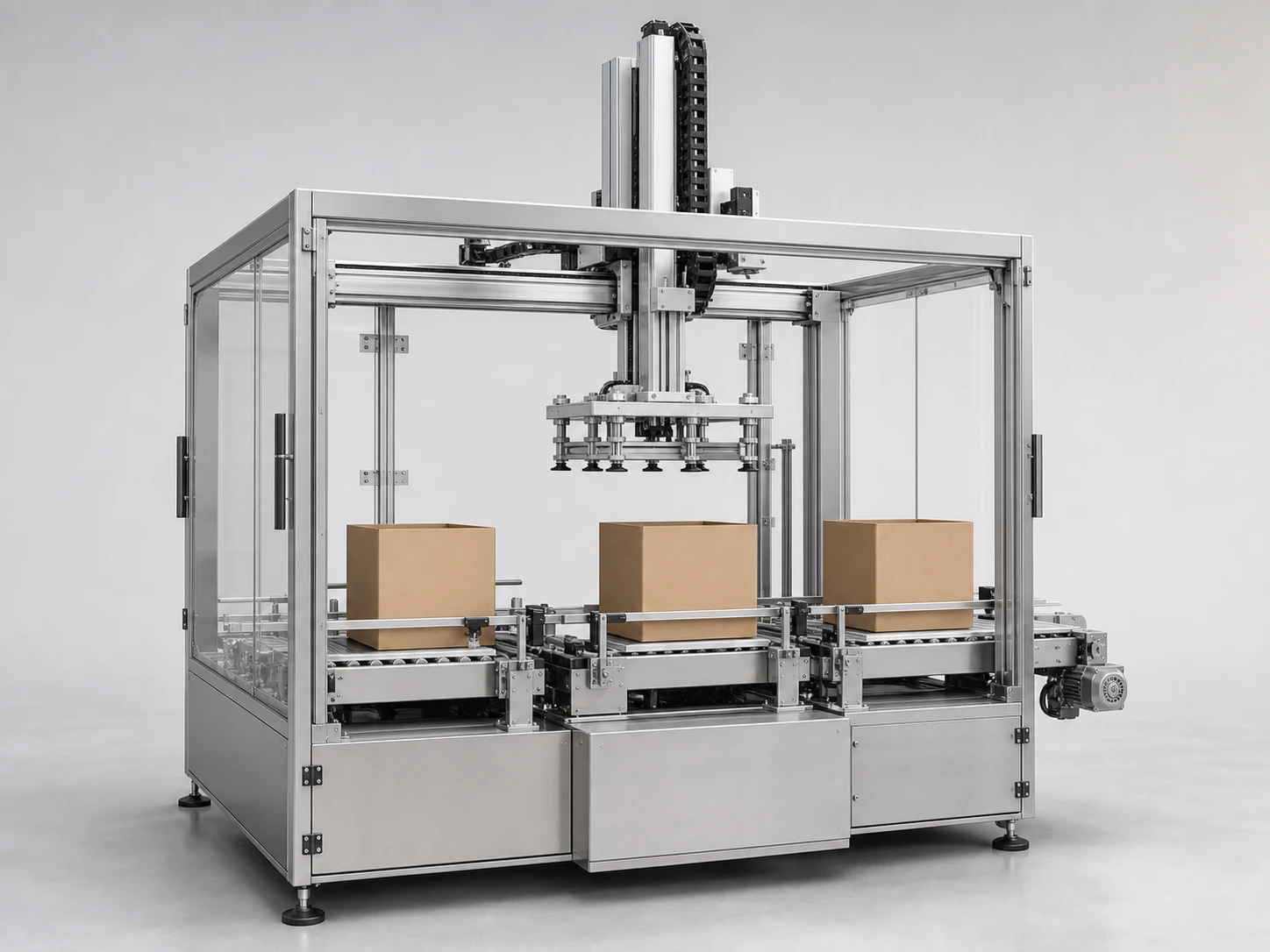
Configure end-of-line equipment for cases, pallets, and warehouse handoff

15 configurable line stages

View configurable equipment at every stage, from container infeed and filling to case packing and palletizing.

  1. 01

    Container unscrambling

    Container unscrambling provides loose-container infeed and automatic orientation for replacing or supporting manual placement in repeat production; container shape and incoming method determine the split with operators.

    Equipment in the supplied material: Turntable-assisted bottle infeed; Robotic bottle unscrambler

    See how this stage joins production →
  2. 02

    Container rinsing

    Container rinsing provides washing and handoff before filling; container surfaces, treatment scope, and infeed orientation determine the arrangement.

    Equipment in the supplied material: Linear inverting rinser; Rotary rinsing machine

    See how this stage joins production →
  3. 03

    Drying

    If residual water affects filling, labeling, or finished-pack appearance, drying is not an isolated machine; it is the handoff between stages.

    Equipment in the supplied material: Multi-track drying machine

    See how this stage joins production →
  4. 04

    Filling

    The filling section covers dosing, container filling, and handoff after filling for repeat production, new pack formats, or line extension; challenging products and core packs determine the configuration.

    Equipment in the supplied material: Automatic tube filling and sealing machine; Horizontal three- or four-side-seal filler; Four-head tracking filler; Multi-lane four-side-seal filler; Roll-film form-and-fill spouted-pouch machine; Spouted-pouch filling machine

    See how this stage joins production →
  5. 05

    Cap feeding

    Cap feeding provides loose-cap sorting and delivery for replacing manual placement or adding a closure format; cap structure and surface requirements determine the specific method.

    Equipment in the supplied material: Vibratory cap feeder; Waterfall cap elevator

    See how this stage joins production →
  6. 06

    Capping

    The capping stage positions and closes the cap, including vacuum closing where required; matched bottle-and-cap samples and the plant acceptance method define the specific action.

    Equipment in the supplied material: Four-wheel capper; Steam vacuum capper; Tracking vacuum capper

    See how this stage joins production →
  7. 07

    Labeling

    The labeling stage applies front/back, wraparound, or positioned labels; pack artwork, bottle shape, and acceptable appearance determine the positioning method.

    Equipment in the supplied material: Two-side labeling machine; Wraparound round-bottle labeler; Positioned round-bottle labeler

    See how this stage joins production →
  8. 08

    Coding

    Date, batch, and variable codes need to follow the real pack and batch-control method; their position should not wait until installation.

    Equipment in the supplied material: Laser coder; Inkjet coder

    See how this stage joins production →
  9. 09

    Sleeving & shrinking

    The sleeving stage applies and shrinks body sleeves or tamper bands; pack design, film, and shrink position determine the specific combination.

    Equipment in the supplied material: Sleeve labeling and shrinking machine

    See how this stage joins production →
  10. 10

    Collection & buffering

    Collection and buffering receive labeled bottles and hold them for manual pickup or case packing; downstream rate and container condition determine the buffer and handoff.

    Equipment in the supplied material: Rotary collection table

    See how this stage joins production →
  11. 11

    Case erecting

    Case erecting supplies opened and formed cases to the packing stage; the real flat case, case style, and feed rate determine the equipment arrangement.

    Equipment in the supplied material: Case erector

    See how this stage joins production →
  12. 12

    Case packing

    Case packing places retail bottles into cases in the intended pack pattern and connects to case sealing and dispatch; bottle form, label condition, and the real case define the action.

    Equipment in the supplied material: Pick-and-place case packer

    See how this stage joins production →
  13. 13

    Case sealing

    For cases entering storage and transport, seal appearance, tape position, and case deformation need checking on a real full case, not only empty dimensions.

    Equipment in the supplied material: Flap-folding case sealer

    See how this stage joins production →
  14. 14

    Palletizing

    Palletizing arranges sealed cases into pallet units for storage and dispatch; real case weight, pallet pattern, and the available personnel area define the cell.

    Equipment in the supplied material: Vacuum-cup palletizer

    See how this stage joins production →
  15. 15

    Pallets & transfer

    A line reaches the warehouse only when the full pallet is handed off. Empty-pallet supply, full-pallet buffering, and forklift pickup need planning together for a smooth warehouse handoff.

    Equipment in the supplied material: Plastic pallet

    See how this stage joins production →

Equipment videos

Line process in operation

These clips show how packs hand off between machines. Compare them with your own line video to identify missing buffers, positioning, or conveyor interfaces.

Video 31
Video 32
Video 33
Video 34
Video 35
Video 36
Video 37
Video 38
Video 39
Video 40
Video 42
Video 44
Video 45
Video 47
Video 52
Video 54
Video 55
Video 56
Video 57
Video 58
Video 59
Video 61
Video 63

Portrait clips

Portrait footage is arranged separately so its original framing stays intact instead of being mixed into the landscape grid.

Video 41
Video 53
Video 60
Video 62

Choose the process equipment needed for a new, expanded, or upgraded project.

Confirm this phase's process scope around mechanical, electrical, and rate interfaces between retained and new equipment. For a specific connection, add machine models, infeed and outfeed positions, conveyor heights, speed control, utilities, and a dimensioned layout.

Share my project conditions