
Equipment directory

Choose published filling and packaging equipment by line stage.

Start from the 15 line stages to decide which section you need, then open a machine page from its card. Fit is confirmed against the product, pack, and existing stages.

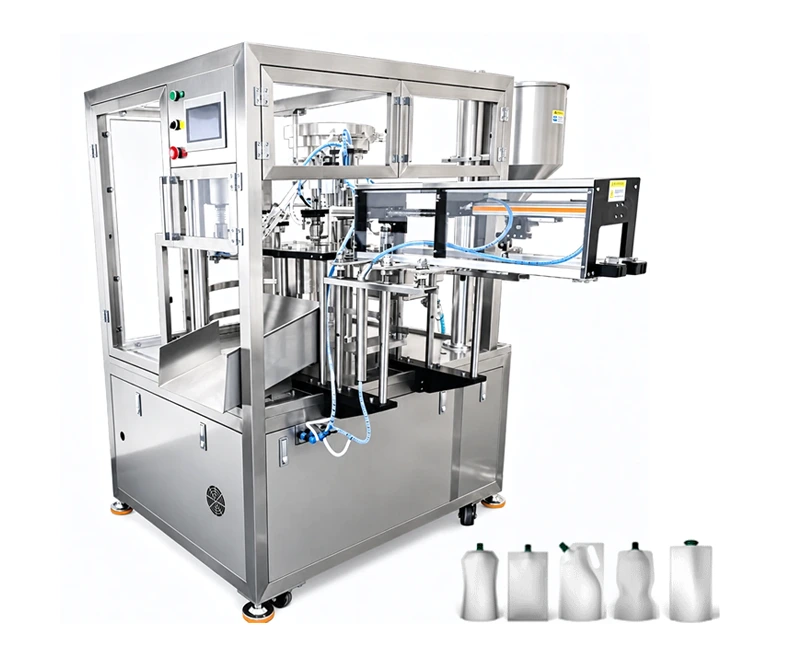
SPfill spouted-pouch filler, hopper and pack examples

SPfill

SPfill: sauce filling into premade spouted pouches

Equipment for a premade-pouch project: agree on product feeding, pack holding, filling and closing using your samples.

Enter by line stage

Choose the stage you want to review.

A filling and packaging line breaks down into 15 configurable stages. Each one states what it resolves before you open the stage page for available equipment and handoff conditions.

Filling section · stages 01–10

01

Container unscrambling

When loose containers arrive in mixed orientations, nest, or stick together, turntable-assisted and robotic infeed need to be assessed against the material and shape.

Open this stage

02

Container rinsing

Internal rinse or external spray, linear inversion or rotary handling depends on the finish, container stability, and the required discharge orientation.

Open this stage

03

Drying

When water remains at the base, finish, or inner wall after rinsing, the hot-air route depends on where it remains, container material, and available dwell time.

Open this stage

04

Filling

Bottles and cans, tubes, premade spouted pouches, roll-film pouches, and multi-lane sachets use different loading, positioning, and sealing actions, so start with the real pack.

Open this stage

05

Cap feeding

When caps nest, jam, or scuff, vibratory-bowl and waterfall-elevator routes need to match top/bottom features, stacking direction, and surface requirements.

Open this stage

06

Capping

Cross-threading, cap marks, damaged tamper rings, and different vacuum needs point to different routes such as four-wheel, steam-vacuum, or tracking vacuum capping.

Open this stage

07

Labeling

Front/back labels on flat bottles, wrap labels on round bottles, and registered labels require different container support, anti-rotation, dispensing, and graphic positioning.

Open this stage

08

Coding

Dates, batch numbers, shift codes, and variable QR codes must work on the actual pack surface; position, material, readability, and error prevention determine the coding-stage arrangement.

Open this stage

09

Sleeving & shrinking

Body sleeves, neck tamper bands, and shaped containers differ in film, lay-flat width, cut length, drop orientation, and shrink position.

Open this stage

10

Collection & buffering

If finished bottles crowd, fall, or fill the turntable after labeling or coding, buffer design cannot be chosen by turntable diameter alone.

Open this stage

End-of-line section · stages 11–15

This directory lists published equipment only. Machines that are not published are not invented here; state the stage name and purpose in the inquiry if you need a specific one.

Published from the content desk

Published equipment

FTPfill Four-Head Tracking Piston Filler for Tomato Products

FTPfill Four-Head Tracking Piston Filler for Tomato Products

FTPfill fills tomato sauces, ketchup, paste and related food products while containers keep moving on a chain conveyor. Four filling heads track container movement to keep the product surface steadier during filling.

View equipment
FTPfill Four-Head Dynamic Tracking Filler for High-Viscosity Tomato Products

FTPfill Four-Head Dynamic Tracking Filler for High-Viscosity Tomato Products

FTPfill tracks continuously moving containers with four filling heads and piston dosing for ketchup, tomato paste, and similar high-viscosity food products.

View equipment
FTPfill Four-Head Tracking Filler: Buyer Fit Conditions

FTPfill Four-Head Tracking Filler: Buyer Fit Conditions

For food-factory engineering, production, and purchasing teams, this page explains when FTPfill fits viscous tomato-based products, continuously conveyed bottles or cans, and line interfaces, plus the information required before inquiry.

View equipment