
Card pack machine: unwinding, dosing and sealing
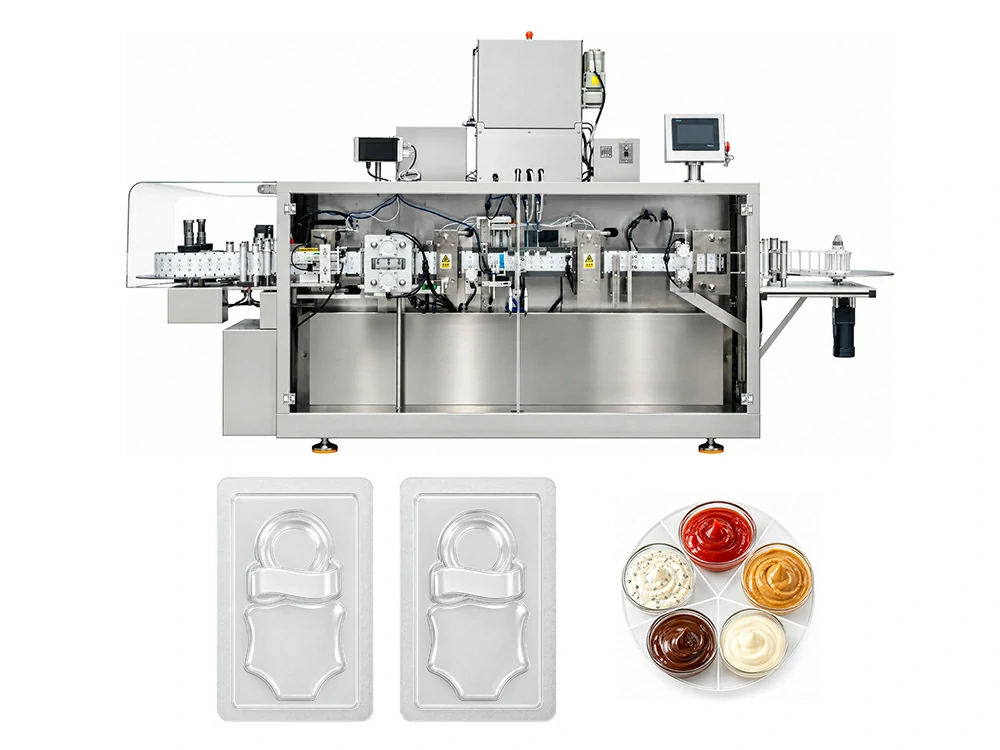
A machine for card-pack packaging of semi-fluid and liquid products — honey, cosmetics, pharmaceutical and essential oils, creams. Two films (rigid PVC or PET plus soft PE), two-sided print registration, U-form sealing, dosing by immersion and tear-off along a score line. Maximum pack size 100 × 120 mm, dosing 0.1–20 ml.
01 · What the machine gives you
A pack your customer opens by hand
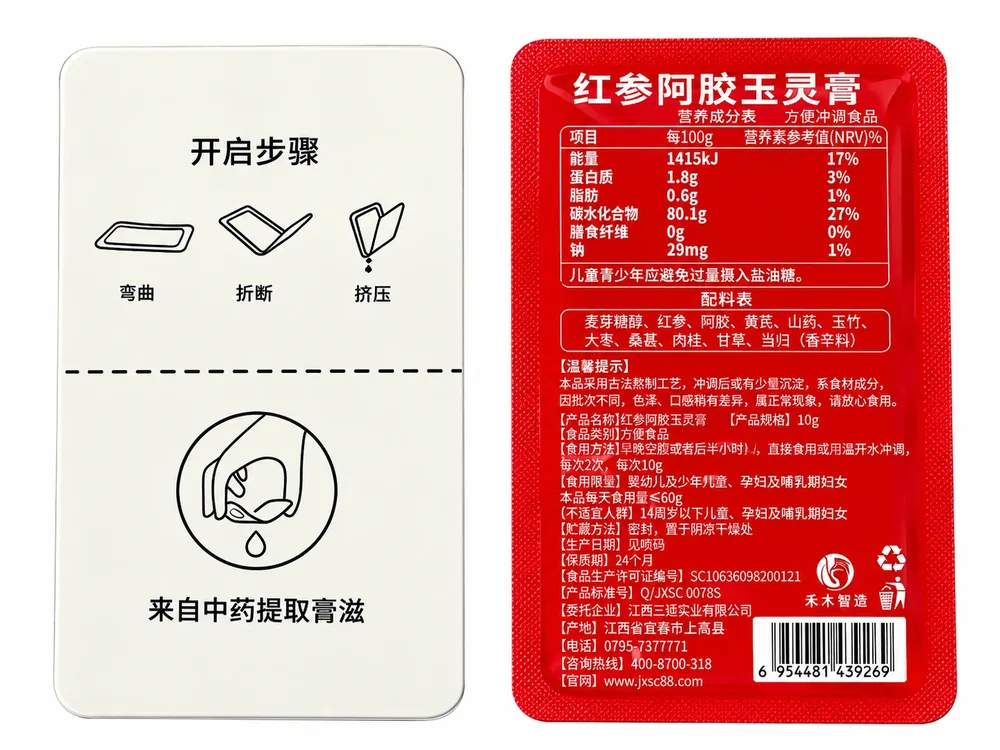
A card pack is neither a pouch nor a blister. The customer bends the card along a pre-scored line, breaks it and squeezes the product out with one hand. Product residue on the walls stays minimal and opening the pack does not soil the hands — for cosmetics, healthcare and food products that is a real argument when the format is being chosen.
Print registers on both sides
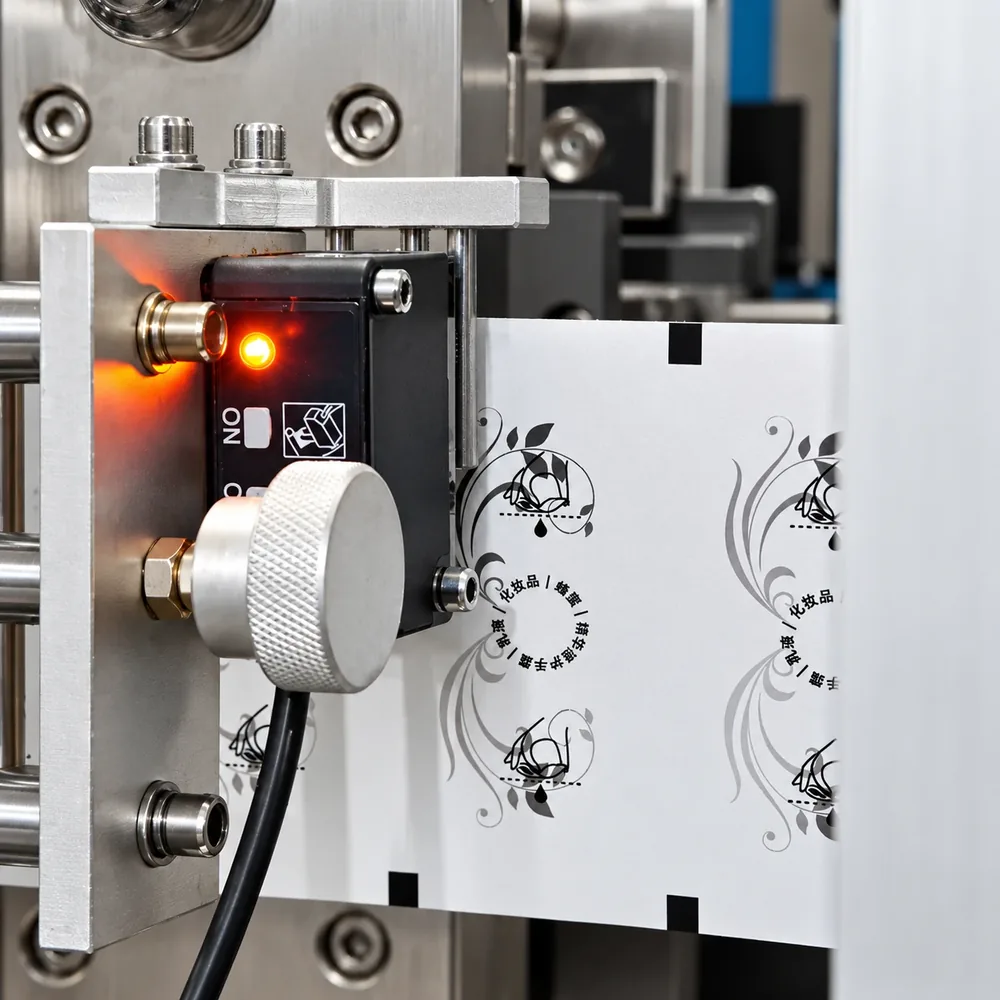
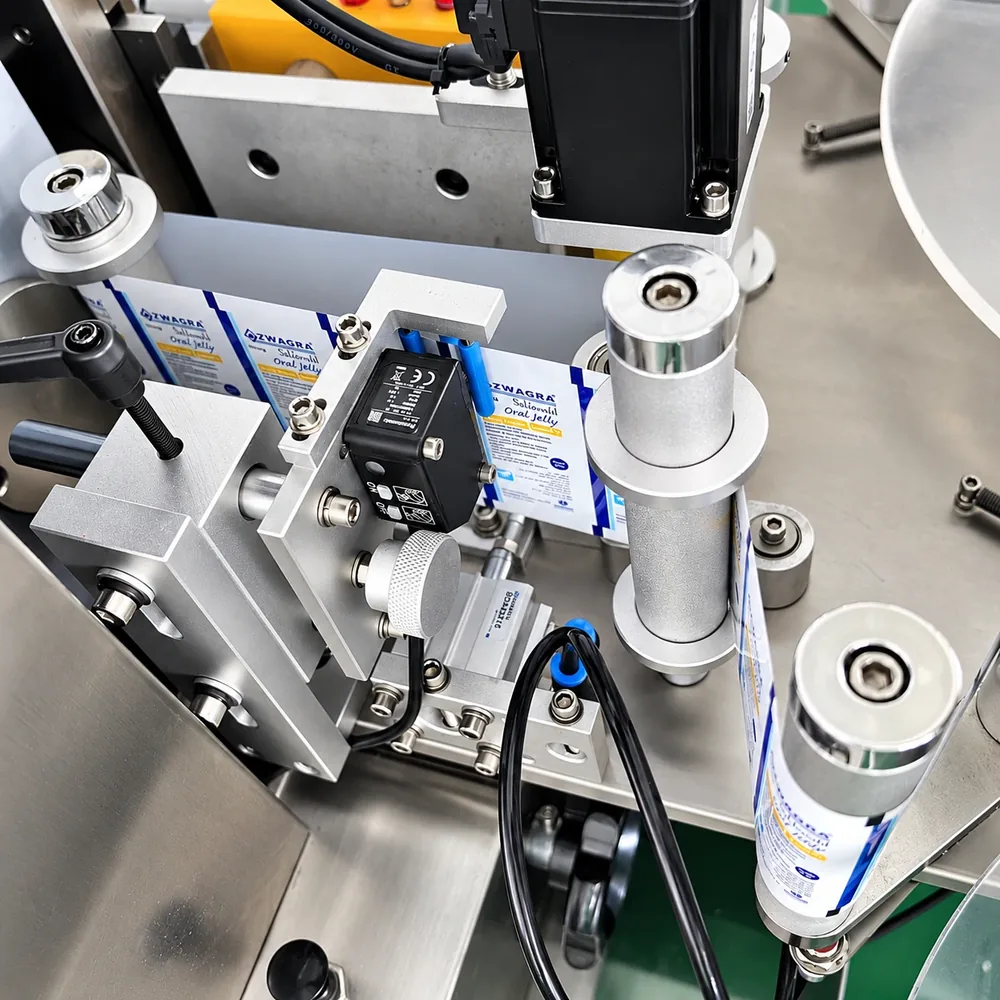
Two photoelectric sensors and two registration units: the front and rear films advance with the same pitch, so the artwork on the face and the reverse stays aligned.
The score line is prepared in advance
A pre-cut defines the depth and position of the score line: the card breaks along that line without being cut through, so the product leaves through the middle of the slit without splashing.
Dosing by immersion
The filling head enters the U-form pocket, fills it and withdraws. Feed-state monitoring, an alarm for an empty cup or a blockage, and protection against drips and splashes are provided.
02 · Specifications
Specifications as documented
Below are the values recorded in the machine documentation. Values absent from the documentation are not listed here — they are agreed when the enquiry is processed.
| Parameter | Value |
|---|---|
| Model | PSM120 |
| Maximum pack size | 100 × 120 mm |
| Packing material | PET/AL, PET/PE, PS/PE |
| Filling volume | 0.1–20 ml |
| Total power | 9 kW |
| Voltage | 220–380 V |
| Punching frequency | 20 times per minute |
| Air consumption | 120–160 l/min |
| Machine weight | 950 kg |
| Machine dimension (L × W × H) | 3300 × 1000 × 1900 mm |
Materials: contact parts in 316L stainless steel, outer covers in SUS304 stainless steel, construction complies with GMP requirements. Dosing accuracy, sealing temperature range, film thickness and the options list are not recorded in the documentation and are confirmed per enquiry.
03 · Process
Eleven working positions
The working cycle runs through eleven positions, from two film reels to a stack of finished cards. Each position performs one operation, and one servo drive moves the film — it is the reference for positioning every operation.
- 1Film reel loading Two reels — rigid and soft film — are mounted on separate shafts with limit stops.
- 2Tension-controlled unwinding The unwind shaft drive with a brake and guide rollers holds the film tension constant and keeps it from wandering.
- 3Preheating and forming Profiled punches are heated, the film softens and is pressed into a cavity. The forming depth is adjustable, and an intelligent system holds the temperature in the set range.
- 4Print registration A photoelectric sensor reads the colour mark on the film and the pull is trimmed to the artwork. Registration is performed on both sides of the pack.
- 5Score-line cutting A pre-cut sets the depth and position of the score line. Single, double and Z-shaped knives are available — chosen to match the opening geometry.
- 6U-form sealing The two films are joined and sealed on three sides into a pack with an open top for filling. The temperature module holds a stable seam temperature.
- 7Information printing A separate inkjet printer applies the date and batch number to the film. The printer has its own panel: printing can be switched on and off and the line content is set there.
- 8Filling The filling head dips into the U-form pocket, fills it and withdraws. A peristaltic or piston pump meters the dose, and protection against drips is provided.
- 9Top sealing After filling the top is sealed, and the pack is closed all round.
- 10Finished-product cutting Finished packs are cut by a die made to the required size. The edges come out even and free of burrs.
- 11Waste removal Trimmings and web waste are collected on a separate unit: a take-up reel, a traction roller, a collection tray and a tension adjuster. The waste is removed in one operation, which simplifies cleaning and keeps the area hygienic.
04 · Construction
What the machine is made of
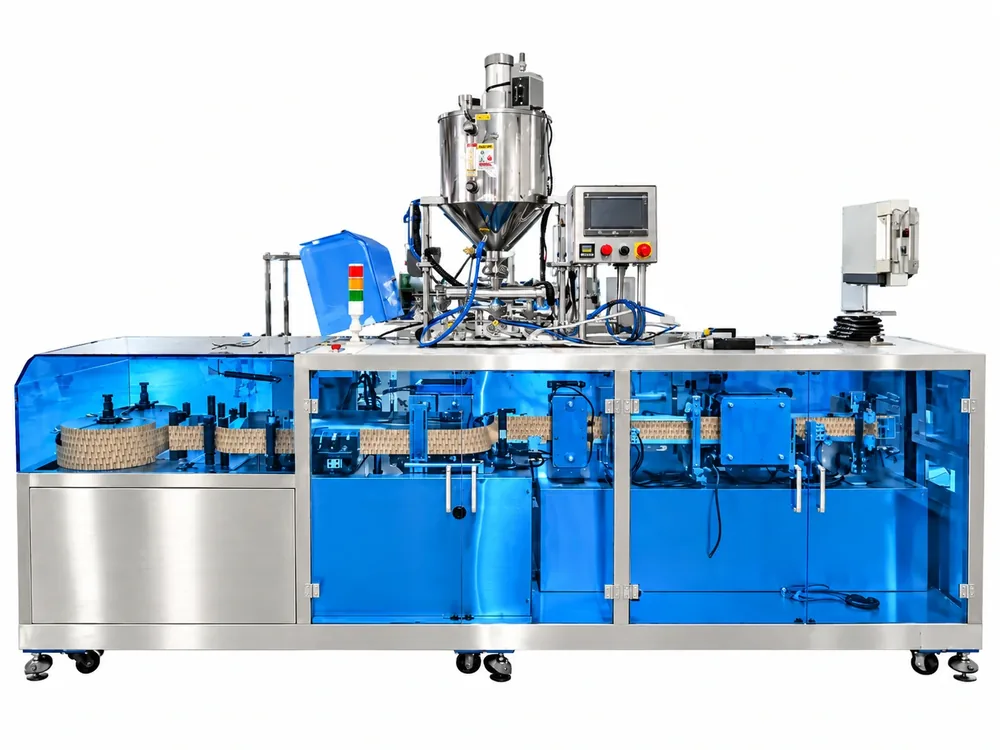
The machine is divided into units that can be serviced separately: unwinding and tension, forming, printing and registration, sealing, filling, drive and control.
Servo drive as the positioning base
A single servo drive with clamping rollers moves the film and acts as the reference unit for cutting, filling and sealing. It also takes its commands from the PLC.
Filling above the line
Above the line sits the dosing unit with a servo drive, a ceramic pump and a hopper. All the product passes through it before reaching the filling head.
Two control panels
The main panel sets film speed, forming temperature, dosing, sealing time and the audible and visual alarms. The printer panel is separate.
05 · Applications
Where this format works best
A card pack is intended for semi-fluid and liquid products of small volume that are squeezed out by hand. Below are the typical categories; the specific product is matched against a sample.
Food products
For honey and thick products, the behaviour of the viscous product at the moment of dosing is checked on a sample.
Cosmetics
Print on the face and the reverse is synchronised — for cosmetics that affects how the brand is perceived.
Healthcare and pharmaceuticals
316L contact parts and GMP-oriented construction — a basic requirement for medical use.
06 · Selection
What is needed for selection
A machine is matched not by product name but by sample and material: they determine both how the dosing unit behaves and how the pack opens.
01Product sample
Viscosity and behaviour at dosing are needed: a stringing, foaming or particulate product calls for a different feed mode.
02Film material
The rigid/soft film combination determines which seams and pre-cuts are permissible. The documentation lists PET/AL, PET/PE and PS/PE.
03Pack size and format
The maximum size is 100 × 120 mm. The pack dieline, seam position and how the end user opens it are needed.
04Required output
The documentation records a punching frequency of 20 per minute. Whether that meets the planned line output is checked.
05Print and coding
Two-sided registration and whether an inkjet printer for date and batch number is needed both affect selection.
06Discharge and waste handling
It must be clear where finished packs go and how often waste is removed — this affects the zone length and how the next machine is fed.
What stays open at the project stage
Dosing accuracy, sealing temperature range, film thickness, the options list, certificates, delivery times and price are not recorded in the machine documentation. These items are agreed against the sample and confirmed during the calculation; until then they are not stated as machine specifications.
07 · Questions
What is usually asked
How does a card pack differ from a blister?
In a blister the product sits in a rigid cavity under a transparent film. In a card, two films are joined at the edges and the product is squeezed out through a tear in the card. The user opens the pack with their hands and does not touch the product.
How is the pack opened?
Along a prepared score line: the card is bent, the line breaks and the product comes out through the slit. The pre-cut sets the depth and position of the line; single, double and Z-shaped knives are available, so the width and shape of the opening can be matched to the product.
Is the print registered on both sides?
Yes. The machine has two registration units: the front and rear films advance with the same pitch, so the artwork on the face and the reverse of the card matches.
Which materials are suitable?
The documentation lists three combinations: PET/AL, PET/PE and PS/PE. Compatibility with a specific product and film is confirmed on a sample.
What are the contact parts made of?
Contact parts are in 316L stainless steel and the outer covers in SUS304. The construction complies with GMP requirements.
What output does the machine reach?
The documentation records a punching frequency of 20 per minute and dosing of 0.1–20 ml. Output in packs per hour is calculated for your pack and mode at the project stage.
Calculation request
We will match a line to your sample
Tell us about the product, the film material and the pack format — we will prepare a configuration calculation and match the equipment to the task.
Engineering consultation before the calculation: on material, pack format and how the pack is opened.