
Project resource
FTPfill Four-Head Dynamic Tracking Filler for High-Viscosity Tomato Products
FTPfill tracks continuously moving containers with four filling heads and piston dosing for ketchup, tomato paste, and similar high-viscosity food products.
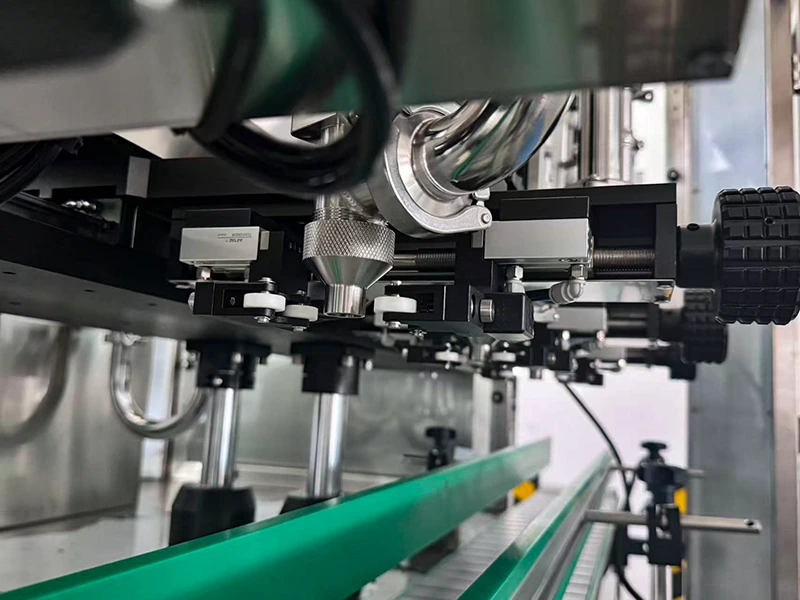
The decision this page helps you make
The process changes from stop-and-fill dosing to dynamic filling: containers continue along the chain conveyor while the heads track their movement. Four heads work together, reducing start-stop movement of the product and manual intervention.
Fit conditions
The product is ketchup, tomato sauce, tomato paste, tomato puree, tomato juice, diced tomatoes, or a similar high-viscosity food product.
Containers are bottles, cans, or similar formats that can move continuously into the filling station on a chain conveyor.
The project requires adjustment of the bottle grippers, side guides, and filling-head position to match the container mouth, diameter, and height.
The line can provide stable conveying, product supply, and the electrical and pneumatic conditions required by the equipment.
Position in the production line
FTPfill sits at the continuous filling station after container infeed: upstream equipment supplies the hopper and brings bottles or cans onto the chain conveyor. FTPfill grips and tracks the containers for filling, with cleaning discharge provided; downstream capping, labeling, or case-packing interfaces require line confirmation.
Decision facts
Filling logic
Containers keep moving while the filling heads travel forward in sync with container speed.
Number of heads
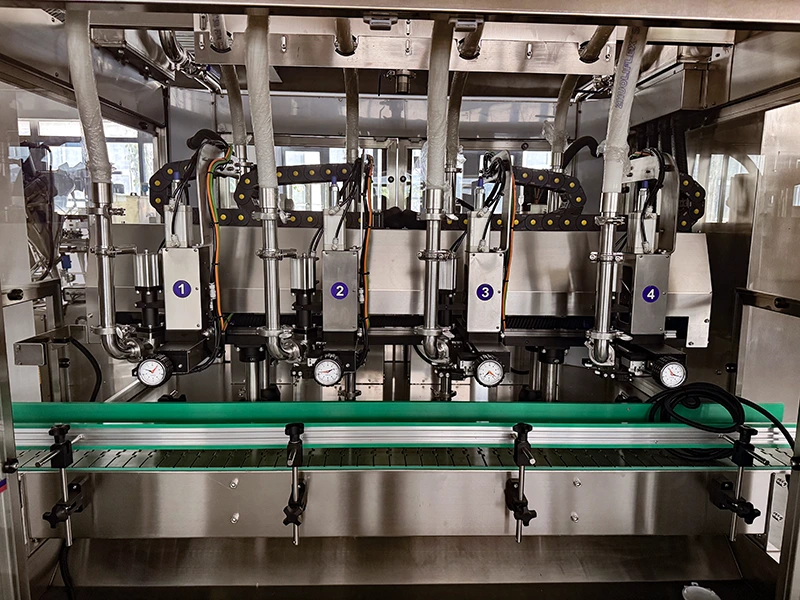
Four filling heads, described in the source as capable of coordinated or individual movement.
Dosing structure
Piston pumps or dosing cylinders work with three-way rotary valves for product intake, dosing, and discharge.
Continuous conveying
A chain conveyor moves bottles or cans forward; the side guides and bottle grippers are adjustable.
Product level monitoring
A hopper level sensor sends level feedback to the system and can stop the feed pump from continuing to fill the hopper.
Control and guarding
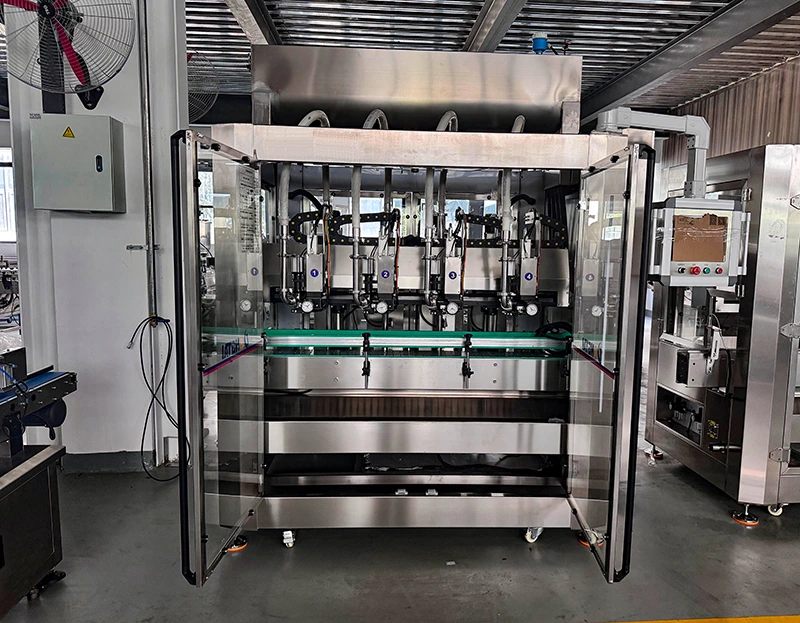
The equipment uses PLC control, a touchscreen HMI, servo drives, and transparent tempered-glass safety doors; the frame is 304 stainless steel.
Containers keep moving while the heads track
FTPfill uses dynamic tracking as its core motion. Bottles or cans continue forward on the chain conveyor, and the filling heads move in the same direction and at the container speed to fill during travel. Compared with stop-and-fill positioning, the source describes less product movement and splashing caused by inertia, leaving a steadier product surface after filling.
Four-head piston dosing and product flow
Product enters the upper hopper, then flows through the product lines to the piston pumps or dosing cylinders. Three-way rotary valves switch between intake and discharge paths, while servo-driven piston strokes perform dosing before the four heads discharge into the containers. A hopper level sensor feeds level information to the system to help control the feed pump and stop continued filling once the monitored level is reached.
Each filling head includes a filling valve, a lifting cylinder, and adjustable bottle grippers. During filling, the nozzle moves close to or partly into the container mouth, while the grippers stabilize the container and keep the mouth aligned with the nozzle. The gripper spacing can be adjusted when the container format changes.
Conveying, changeover adjustment, and cleaning path
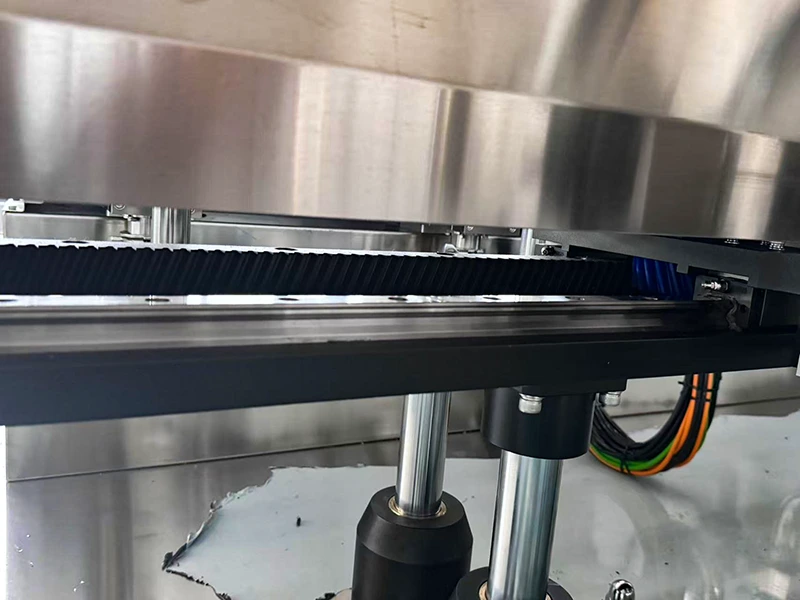
The chain conveyor moves bottles or cans forward. Side-guide height and spacing are adjustable, and the bottle-gripper spacing can be changed with adjustment knobs to match container diameter, height, and mouth conditions. Nylon cable carriers protect the pneumatic tubes and cables serving the moving heads during operation.
After filling, clean or sterile water can be sent through the dedicated cleaning lines and cleaning valves to clean the product circuits. Wastewater enters the bottom collection box and is discharged through the side outlet. Quick-connect fittings support maintenance and component replacement.
Visible guarding and operator control
The machine uses a 304 stainless steel frame and transparent tempered-glass safety doors. Operators can observe the running condition with the doors closed, while the doors can be opened for cleaning, maintenance, or inspection. The side touchscreen HMI provides basic start, stop, and emergency-stop controls and displays operating status and production data.
The electrical cabinet contains PLC modules, a frequency converter, servo drives, relays, a switching power supply, and terminals. A transparent cabinet door and cooling fans support visual checks without opening the cabinet; project-specific electrical conditions still require confirmation.
Inputs for project confirmation
Product identity, such as ketchup, tomato sauce, tomato paste, or another product, and whether it contains particles.
Container type: glass bottle, PET bottle, can, or another format.
Container mouth, height, diameter, and neck details for confirming gripper, side-guide, and nozzle adjustment.
Target fill volume, whether multiple formats share the line, and target throughput or containers per minute.
Product temperature, viscosity, flowability, and particle-size information for product testing.
Upstream supply, conveying direction, downstream capping or labeling interfaces, and site electrical, pneumatic, clearance, and cleaning requirements.
Share product and container details to confirm the tracking-filling interface
Share the product, container dimensions, target fill volume, throughput, and upstream and downstream interface details so the engineering team can assess FTPfill configuration and product-trial needs.