
Project resource
FTPfill Four-Head Tracking Filler: Buyer Fit Conditions
For food-factory engineering, production, and purchasing teams, this page explains when FTPfill fits viscous tomato-based products, continuously conveyed bottles or cans, and line interfaces, plus the information required before inquiry.
The decision this page helps you make
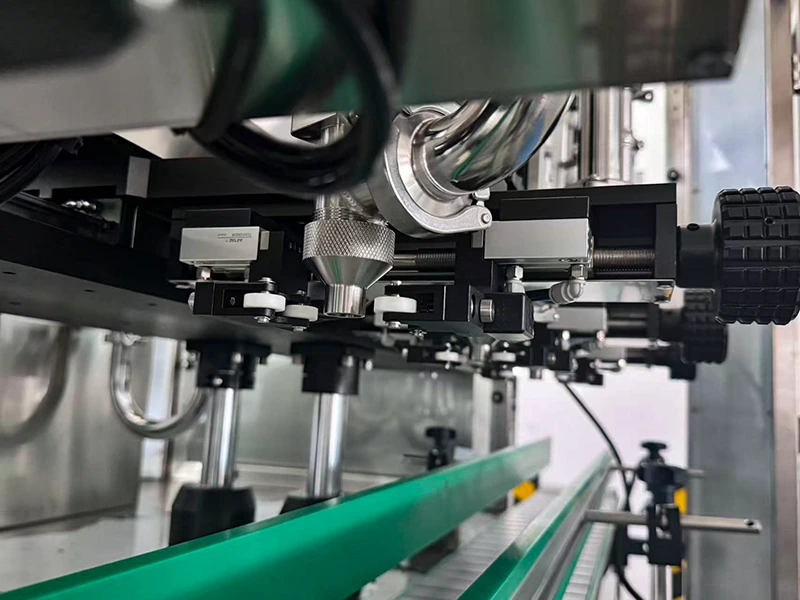
The buyer can evaluate a shift from stop-and-fill operation to continuous tracking filling: bottles or cans keep moving on the chain conveyor while the filling heads travel with the containers. Four filling heads, piston metering, and servo-driven motion support continuous filling of viscous tomato-based food products, reducing the risk of surface movement and splashing caused by stopping and restarting.
Fit conditions
The product should be ketchup, tomato sauce, tomato paste, tomato puree, tomato juice, chopped tomato, or a similar food product; actual viscosity, particles, and flowability still require sample confirmation.
Containers must be able to move continuously on the chain conveyor. Bottles and cans are supported container directions, while glass and PET bottles should be confirmed for the project.
The process must accept tracking filling without stopping the container rather than only positional filling after a stop. Downstream capping, labeling, and conveying stages can be considered as line interfaces.
The container mouth, diameter, and height must allow adjustment of the bottle grippers, side guides, and filling-head position. Adjustable structures are confirmed, but no dimensional range is documented.
The site must provide stable air, electrical power, installation space, and cleaning drainage conditions. Exact air pressure, voltage, power, clearance, and drainage interfaces must be confirmed during the project.
Position in the production line
FTPfill sits at the bottle or can filling position after product enters the hopper: upstream product piping and the hopper supply the material while the chain conveyor brings in empty containers. The piston pumps, metering chambers, and filling heads perform tracking filling; downstream interfaces may include capping, labeling, and later conveying or packaging stages.
Decision facts
Filling-head configuration
Four filling heads are provided for the documented tracking-filling process.
Filling logic
The container does not stop; the filling heads move forward in sync with the container speed.
Metering method
Piston pumps and metering chambers work with three-way valves for intake, metering, and discharge filling.
Container conveying
A chain conveyor moves bottles or cans forward continuously; bottle grippers and side guides are adjustable.
Controls and motion
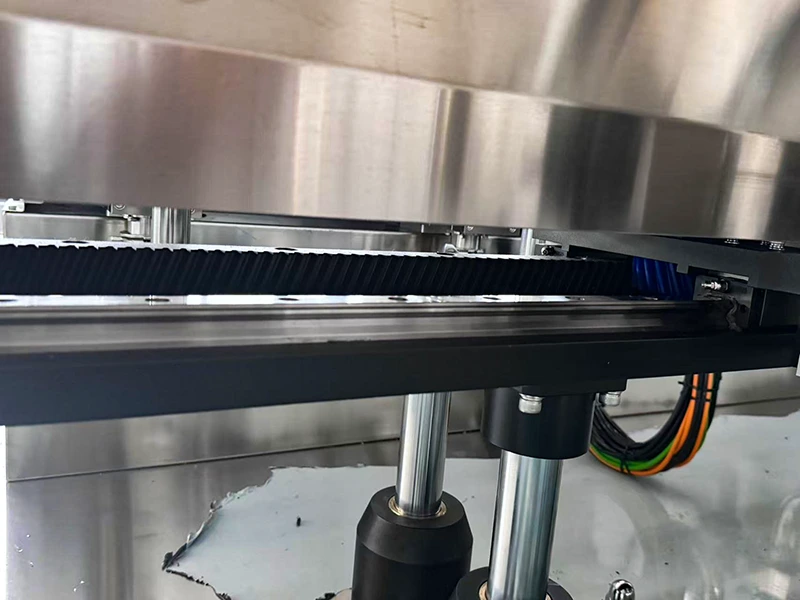
PLC, a touchscreen HMI, and servo drives support filling, tracking motion, and operator interaction with machine status.
Cleaning and guarding
The machine has cleaning piping, a cleaning valve, a wastewater collection box, and transparent tempered-glass guards; the cleaning method and site drainage interface require confirmation.
Is continuous tracking filling right for your process?
If the current process stops containers before filling, the buyer should assess how stopping and restarting affects the surface of the sauce. FTPfill keeps the containers moving while the filling heads travel with them; the documented process is dynamic filling with four heads working along the container movement.
This fit does not imply a fixed output or cycle-time promise. The sources provide no numeric speed, fill-volume, or accuracy values, so the actual cycle must be confirmed against the product, container, and line interfaces.
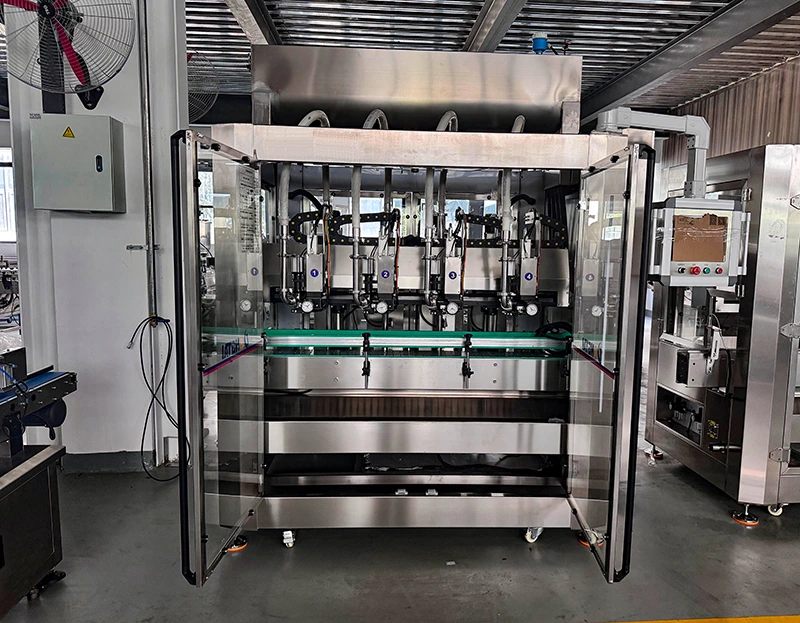
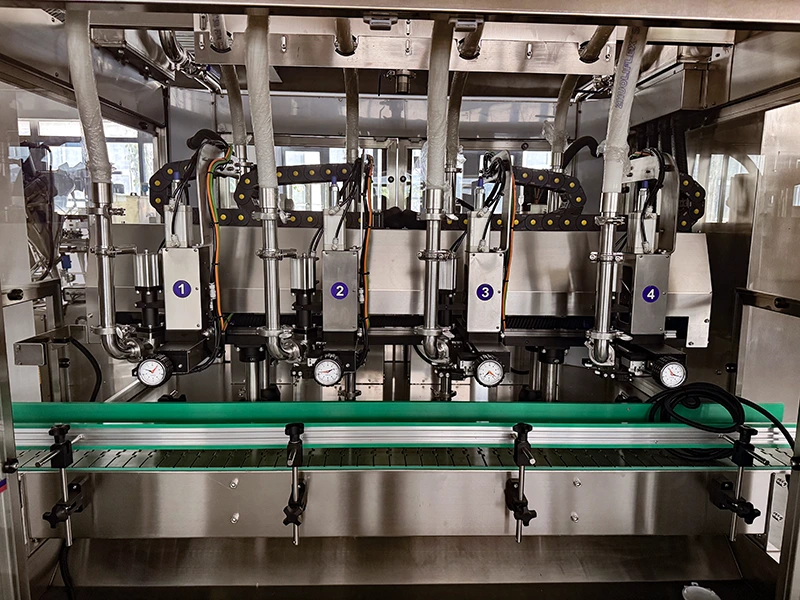
Product, container, and gripping fit
The documented fit centers on ketchup, tomato sauce, tomato paste, and similar tomato-based food products, with bottles and cans supplied as continuously conveyed containers. The buyer should provide product flowability, particle information, container mouth, height, and diameter; a general viscosity label is not enough to replace sample or interface confirmation.
When the container format changes, the bottle-gripper distance, side-guide height, and guide spacing must be adjusted so the filling nozzle aligns with the mouth. These adjustment structures are documented, but their permitted dimensional ranges are not provided.
Line interfaces require project confirmation
In the process sequence, FTPfill receives product from the hopper and product piping and empty containers from the chain conveyor. Capping, labeling, and later conveying or packaging interfaces can be planned after filling, but these downstream machines should not be understood as included in the filler.
The inquiry should specify the upstream feeding method, downstream equipment or interface direction, container flow direction, installation clearance, and whether turnkey line delivery is required. The sources do not define a universal dimensional, electrical, or air-supply standard.
Control, cleaning, and maintenance conditions
The machine uses PLC, a touchscreen HMI, servo drives, and pneumatic components for filling, head movement, valve opening, and bottle gripping. Stable air is important for cylinder actions; the site must also confirm power, cleaning-water routing, wastewater collection, and drainage.
The sources show quick-connect product piping, cleaning piping, a cleaning valve, and a wastewater collection box. They do not prove a fixed CIP program, cleaning duration, or automatic recipe functions, so each item should be confirmed during procurement.
Inputs for project confirmation
Product details: ketchup, tomato sauce, tomato paste, tomato puree, tomato juice, chopped tomato, or another product; provide temperature, flowability, viscosity, and particle information.
Container information: glass bottle, PET bottle, can, or another container; provide the mouth, diameter, height, weight, and outline drawing.
Target fill volume and formats: confirm whether one format or multiple formats will run on the line; the sources provide no fill-volume range, so it must be confirmed per project.
Target output and cycle: bottles or cans per minute and whether continuous no-stop operation is required; no fixed speed is documented.
Line interfaces: upstream feeding, downstream capping or labeling, conveying direction, whether a case-packing stage is needed, and whether the purchase is standalone or turnkey.
Site conditions: power, air supply, installation clearance, floor conditions, cleaning-water routing, and wastewater drainage; exact electrical, air, and dimensional parameters remain to be confirmed.
Submit product and line details to confirm FTPfill fit
Provide the product, container, target fill volume, output, upstream and downstream interfaces, and site utilities so the fit can be reviewed.