
Project resource
FTPfill Four-Head Tracking Piston Filler for Tomato Products
FTPfill fills tomato sauces, ketchup, paste and related food products while containers keep moving on a chain conveyor. Four filling heads track container movement to keep the product surface steadier during filling.
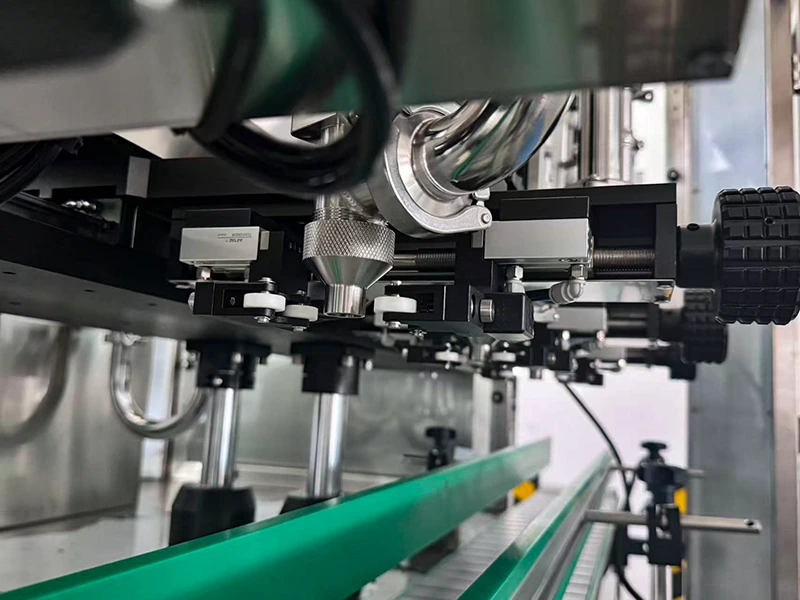
The decision this page helps you make
Instead of stopping each container for a positioning fill, the line can keep bottles or cans moving while the four filling heads travel with them during dosing. This changes the operation from stop-start filling to dynamic tracking, helping keep tomato-product surfaces steadier and reducing the conditions that cause splashing during acceleration.
Fit conditions
The product is tomato sauce, ketchup, tomato paste, tomato puree, tomato juice, cut tomato or a related food product whose flow behavior is confirmed for this dosing system.
The container is a bottle, jar or can that can be conveyed continuously on the chain conveyor and stabilized by the adjustable bottle grippers and side guides.
The production line provides an upstream product feed to the hopper and a conveyor interface for container infeed; downstream capping, labeling or packing equipment is confirmed separately.
For a new bottle format, the neck, height and diameter must be supplied so that the gripper distance, side guides and filling-head position can be checked and adjusted.
Position in the production line
Product is fed into the upper hopper, passes through the product piping, piston dosing chambers and three-way rotary valves, then reaches the four filling heads above the chain conveyor. Filled containers can proceed to downstream capping, labeling or packing equipment when the line interface is matched.
Decision facts
Filling heads
4 filling heads
Filling motion
Containers keep moving; the filling heads travel forward with the container during filling
Dosing method
Piston dosing chambers with three-way rotary valves for product intake and discharge
Drive and control
Servo-driven motion with PLC and touchscreen HMI
Container transport
Chain conveyor with adjustable side guides and bottle grippers
Frame and guarding
304 stainless steel frame with transparent tempered-glass safety doors
Product monitoring
A hopper level sensor feeds back to control the upstream feed pump
Dynamic filling without stopping the container
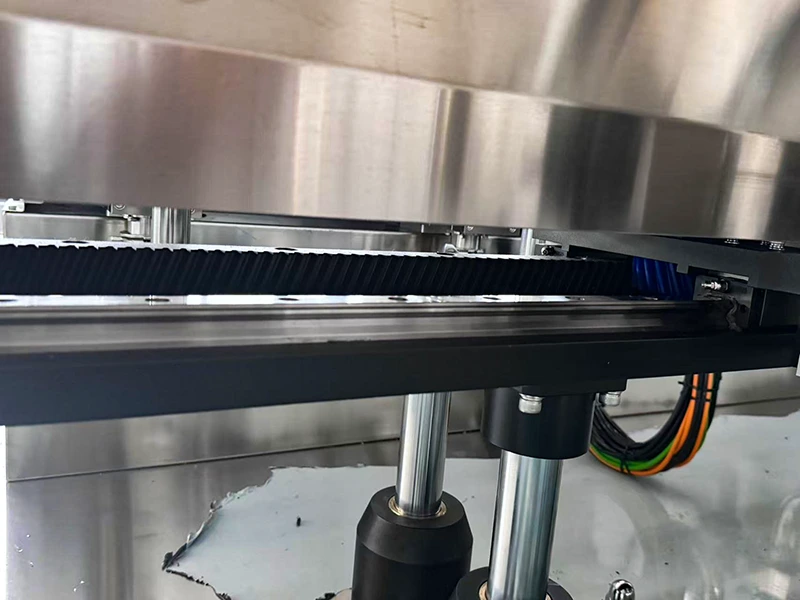
The chain conveyor moves the bottle or can forward continuously. During the filling cycle, the filling head follows the container's direction and speed instead of waiting for a stop.
This tracking motion keeps the product in a steadier state than a stop-start positioning cycle, which is relevant when filling tomato sauces and other viscous food products.
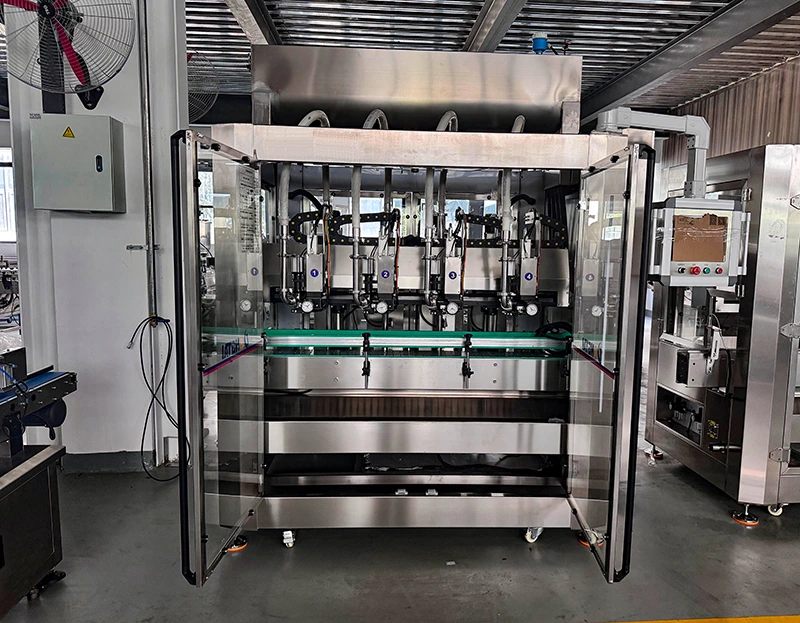
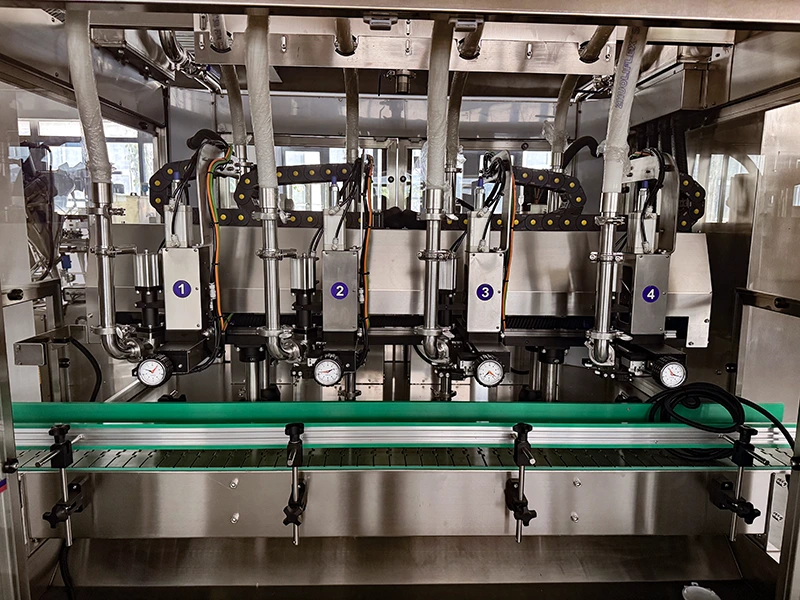
Four-head piston dosing and container stabilization
Four dosing channels use piston dosing chambers and three-way rotary valves. The pistons draw product into the dosing chambers and discharge it through the filling valves to the container.
Servo drive controls the piston movement, while pneumatic cylinders operate filling-valve opening, filling-head lift and the bottle grippers. Adjustable grippers keep the container neck aligned with the filling nozzle.
Product path, cleaning circuit and changeover access
The hopper feeds the product piping and piston dosing section. A separate cleaning pipeline and cleaning valve allow water or sterile water to be introduced after production, with wastewater collected in the lower tank and discharged through the side outlet.
Product connections use quick-release clamp fittings to support inspection and component replacement. When the container format changes, the gripper spacing and side-guide position must be adjusted to the supplied bottle dimensions.
PLC, HMI and visual access to operating status
The touchscreen HMI provides operator interaction for machine start and stop, filling-related settings and viewing operating information. The exact available parameter range must be confirmed for the selected configuration.
The electrical cabinet contains PLC modules, drives, relays, terminals and ventilation openings. Transparent cabinet doors and the tempered-glass safety guards allow visual observation without opening the doors during normal operation.
Inputs for project confirmation
Product name and formulation: tomato sauce, ketchup, paste, puree, juice, cut tomato or another product; provide flow behavior and whether particles are present.
Container type and material: glass bottle, PET bottle, can or another container format.
Container geometry: neck diameter, container height and body diameter for every format to be run.
Target fill volume and whether several fill formats must share one line; the supported numerical range is not stated in the current materials.
Required output in bottles or cans per minute; machine speed and capacity are not stated in the current materials.
Line interfaces: upstream feed pump and product supply, conveyor infeed, and downstream capping, labeling or packing equipment.
Utilities and hygiene requirements: available electrical and air-supply conditions, cleaning method, and whether quick changeover or a specific CIP requirement is needed.
Confirm your filling application
Send the product, container, target fill volume, output and line-interface details. The FTPfill configuration can then be reviewed against the actual process and the unconfirmed parameters can be clarified.