
Dynamic filling of tomato products: four-head piston dosing unit for ketchup and paste
Tomato paste and ketchup are not watered-down ketchup: they thicken as they cool, carry pieces and pull against the piston. Four servo-driven piston dosing units run synchronously with the container and dose by weight without stopping the bottles, while we select the filling parameters and heating to match your product and filling temperature. The line configuration is agreed on samples.
01
What changes with this machine
FTPfill moves the thick-product filling section from stop-start feeding to continuous container movement. Bottles or cans travel along a chain conveyor, and four heads move with them during filling. This reduces product surges at startup and helps keep the fill surface calmer. The piston dosing unit first draws product into a measuring chamber, then delivers it through the head; the actual mode, volume, and container compatibility are confirmed before the project.
The main product is ketchup, tomato sauce, tomato paste, puree, juice, or another food product of increased viscosity; composition, temperature, particles, and rheology must be confirmed.
Containers must be fed continuously: glass or PET bottles, cans, or another agreed container with known diameter, height, and neck finish.
The line has space for a chain conveyor, infeed, and downstream equipment, such as capping, labeling, or packaging.
Pneumatic units require a stable, prepared air line to operate; power supply and compressed air conditions are agreed separately.
FTPfill is installed after product infeed and before capping, labeling, or further packaging. Product flows from the upper hopper through pipelines to four piston fillers, then through valves and heads into containers on the chain conveyor. After filling, containers can be transferred to a four-spindle capping machine and other downstream operations; the specific line interfaces must be checked on site.
02
Specifications by head count
Values come from the product manual; the output unit follows the pack format.
| Dynamic principle | Containers do not stop: the heads move synchronously with their motion during filling. |
|---|---|
| Filling group | Four separate heads operate on a common line; coordinated or separate operation is possible according to the equipment logic. |
| Dosing | Each channel uses a piston pump or a metering chamber with a three-way rotary valve to draw in and dispense the product. |
| Drive | Piston motion and head travel are performed by servo drives; the PLC controls the drives and operating sequences. |
| Conveyor and container setup | A chain conveyor, adjustable guides and clamps help hold the container and align the neck with the head. |
| Control and sanitary operation | The HMI shows the equipment status and allows operating parameters to be set; cleaning lines, a cleaning valve and water collection are provided. |
03
Construction and process
1. Container tracking without stopping
The main difference of FTPfill is not a simple increase in the number of heads, but synchronous motion. A chain conveyor moves the bottle forward, a clamp stabilizes its position, and the carriage with the head follows the direction and speed of the container in the filling section. Therefore, the bottle does not have to go through a stop-feed-start cycle. For thick sauce this is important: during a sharp start, the contents sway less and there is less risk of splashing onto the neck or outer surface.
The head height and clamp positions are adjusted for the agreed container. When changing bottles, the diameter, height, and neck are checked, then the distance between clamps, guides, and nozzle position are adjusted. This does not replace testing on the actual product: the container format, line speed, and filling mode must be part of technical approval.
2. Piston dosing for thick product
The second key assembly is separate dosing for each channel. Product flows from the upper hopper into the metering chamber; a servo drive moves the piston, and a three-way valve switches the path between intake and discharge. This sequence separates filling of the dispenser from delivery into the bottle and gives the operator a controllable basis for adjusting volume and speed within the agreed configuration.
For a food line, not only piston movement but also access to the product-contact part is important. The materials specify stainless steel pipelines, quick-release connections, a cleaning circuit, a cleaning valve, and a water collector. This simplifies disassembly and washing, but the specific procedure, cleaning agent, and CIP requirements are not specified and must be approved separately.
3. Control, containers, and logic without unnecessary rejects
The PLC, servos, and touchscreen link the movement of the conveyor, heads, valves, and pistons into a single sequence. The operator can see the machine status and adjust the available operating parameters through the HMI. Transparent doors allow the process to be observed, while the glass door of the electrical cabinet allows the internal components to be monitored without repeatedly opening the cabinet.
For the “no bottle—no fill” mode, it is necessary to confirm in advance which sensor and software interlock will be used on your line. The current materials confirm container clamping, valve control, and motion tracking, but do not provide separate confirmation of a specific bottle-absence sensor. Therefore, this function cannot be considered supplied by default without checking the system schematic and testing it with your containers.
04
Machine photos
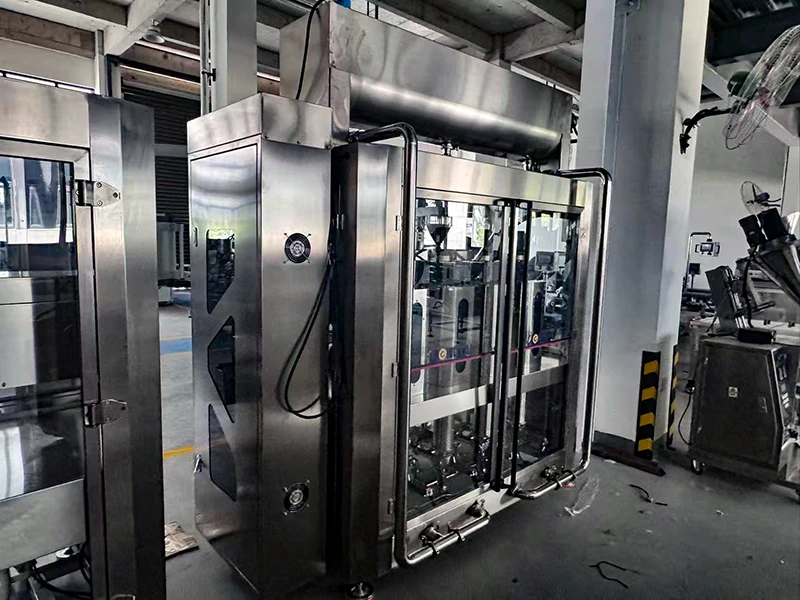
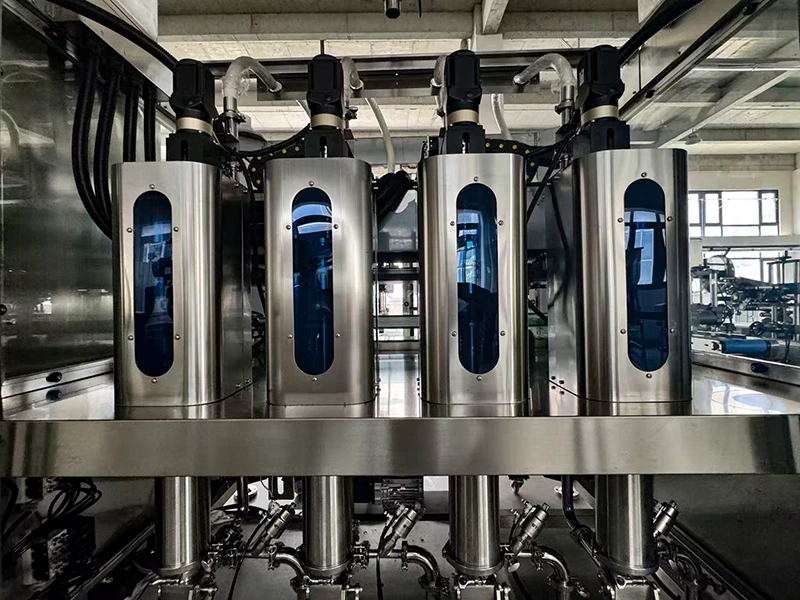
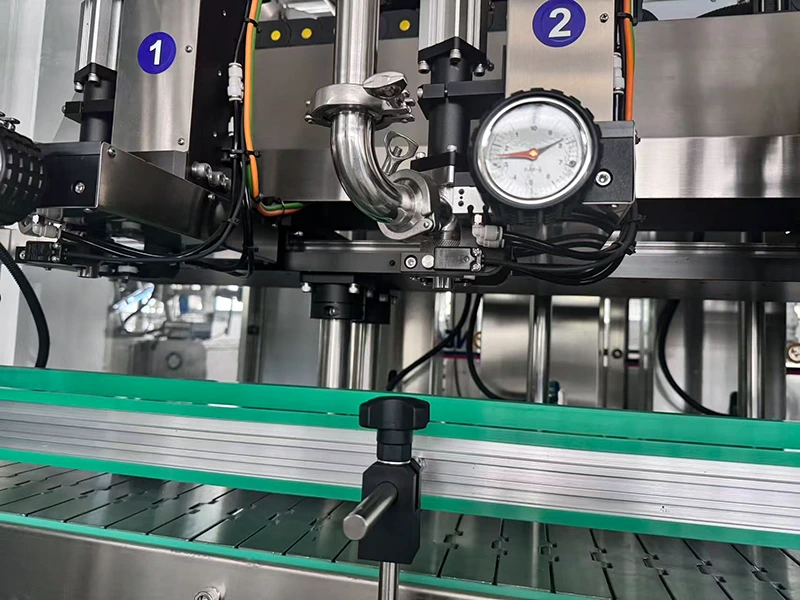
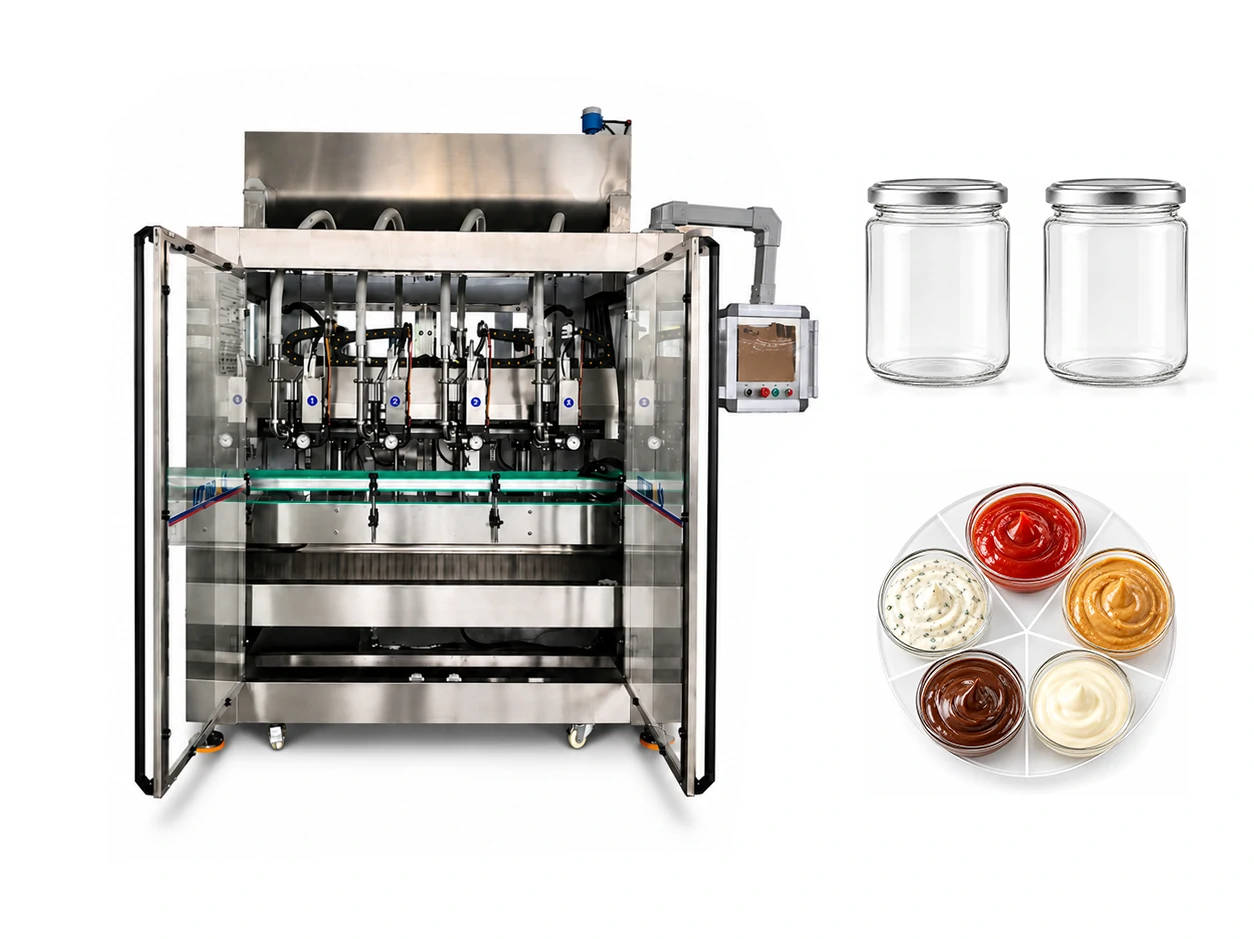
05
What to confirm before ordering
Send samples — we test on your product and build the configuration around it.
- Product: name, composition, temperature, flowability, viscosity, and presence of particles.
- Container: material, shape, diameter, height, size, and neck geometry.
- Target fill volume and whether multiple formats are required on one line.
- Required output in bottles or cans per minute.
- Existing line layout: infeed, conveyor, capping, labeling, and packaging.
- Power supply, compressed air supply, infeed and outfeed direction, and installation space.
- Requirements for “no container, no fill” logic, sensors, interlocks, and signal exchange.
Confirmed by testing, not promised
The materials do not provide confirmed numerical values for output, fill volume range, accuracy, machine dimensions and weight, power, voltage, air pressure, viscosity range, maximum particle size, CIP time, or changeover time. A specific container-absence sensor, compatibility with any bottle format, automatic recipe saving, certificates, delivery times, and warranty terms are also not confirmed. These points must be agreed based on product samples, containers, the existing line layout, and acceptance requirements; they cannot be promised without technical confirmation.
Dynamic filling of tomato products: four-head piston dosing unit for ketchup and paste
Test FTPfill with your containers and product.
Before calculating the line, send a product sample, a drawing or container dimensions, the required volume, target capacity, and a layout of adjacent equipment. Separately state whether a confirmed no-container lockout is required and which interfaces should connect FTPfill to your line.
✓ 15+ years of experience · ✓ own factory in China · ✓ free sample testing