
Project resource
SPfill: configuration options and installation inputs
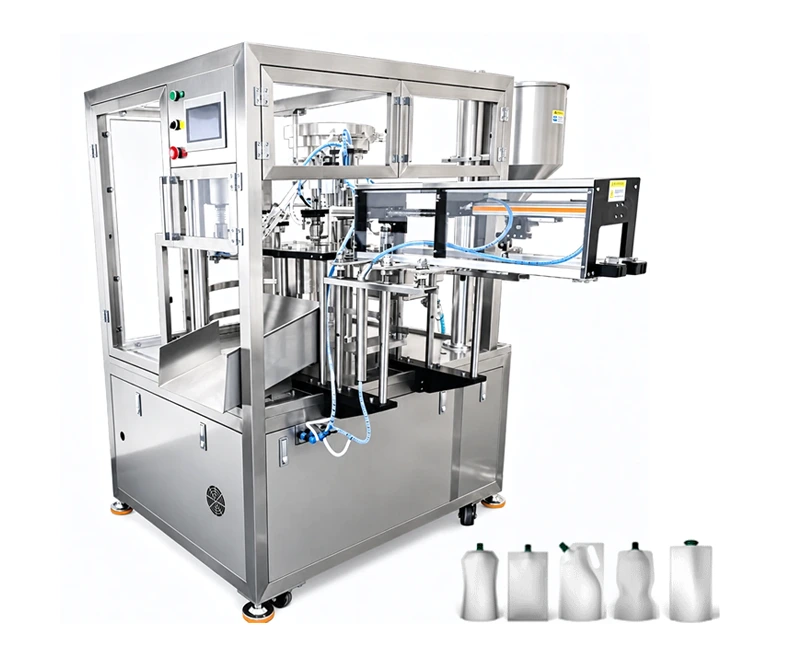
Review filling-head options, optional modules, power, footprint and loading and service access using product and pouch samples.
Solution scenario
Review filling-head options, optional modules, power, footprint and loading and service access using product and pouch samples.
Fit conditions
The product is a liquid or paste; tomato sauce, tomato paste, and sauce base are the documented priority applications.
The package is a premade stand-up pouch with a plastic spout, and the pouch and cap geometry can be checked at the positioning and capping stations.
The requested fill volume is within the documented 30–2000 ml envelope, subject to confirmation with the actual product and pouch.
The production target can be evaluated against the documented reference of 30–60 bags per minute, with viscosity and fill volume treated as process variables.
The site can provide 220V, 50Hz power, equipment space, floor support, leveling, and access for pouch loading and finished-product discharge.
Process and handoff sequence
- 1
Confirm the product, fill volume, pouch format, spout position, cap interface, and required production target before selecting the process configuration.
- 2
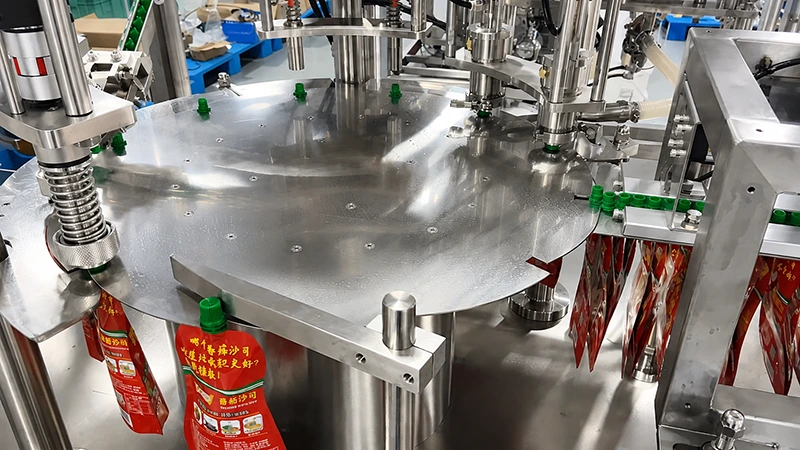
Feed empty spouted pouches to the rotary worktable, separate the pouches, and position them in the machine clamps.
- 3
Use the selected pump, hopper, and filling-head arrangement to dose the product; the material notes identify piston and rotor pump options and optional heating or mixing.
- 4
Check pouch presence and spout position with the photoelectric system so that filling is enabled only when the pouch is present and correctly positioned.
- 5
Transfer caps through the cap handling path, place them on the spouts, complete screw capping, and discharge the sealed pouches to the next operation.
Product, Pouch, and Dosing Configuration
The documented product envelope covers liquids and pastes, with a 30–2000 ml fill range. Tomato sauce, tomato paste, and sauce base are the clearest documented use cases; the actual product behavior must be checked before final pump and hopper selection.
The standard specification lists 2, 4, 8, 10, or 12 filling heads, while a six-head version appears in video material. The head count, requested output, pouch format, and fill volume therefore need to be fixed as a configuration decision rather than assumed from a single example.
Site Preparation and Acceptance Sequence
Before installation, confirm 220V 50Hz supply, the 3 kW equipment power reference, floor support and leveling, approximately 300 kg equipment weight, the 1700 × 1300 × 1700 mm envelope, and access for loading, discharge, cleaning, and service.
Acceptance should compare actual fill quantity, pouch positioning, cap engagement, sealing result, discharge continuity, and operating signals with the agreed product and pouch samples. No customer result, certification, delivery time, or return rate is assumed in this solution.
Risks to close early
Product viscosity and fill volume can change the achievable production rate; confirm the process with representative product samples rather than using the 30–60 bags per minute reference as a guarantee.
Pouch dimensions, spout location, cap geometry, and the positioning method must be checked together; the documented angled-pouch width entry contains an unresolved value and should not be used for final design.
The standard head-count list and the six-head video example are not identical; the final head count and any optional heating, mixing, cleaning, or coding module require written configuration confirmation.
The material-contact construction, control-system brands, PLC or HMI models, sensor brands, and final BOM are not fixed by the current source set and must remain open until engineering confirmation.
Inputs to validate the solution
Product identity, product state, viscosity behavior, temperature, and cleaning requirements.
Pouch width and height, spout position, pouch material, cap dimensions, thread or locking method, and pouch samples.
Required filling-head count and confirmation of whether the project uses a standard 2, 4, 8, 10, or 12-head configuration or another version.
Utility and site data: 220V 50Hz supply, 3 kW power reference, floor support, leveling, equipment footprint, operating clearance, and service access.
Need for hopper heating, mixing, spout cleaning, laser coding, upstream or downstream conveying, packing, and product discharge.
Confirm Your Spouted Pouch Process Inputs
Send the product, pouch, cap, output, utility, and acceptance requirements so the SPfill configuration can be reviewed against actual samples.