
Project resource
SPfill — Technical Solution for Premade Spout Pouch Filling and Capping
A process framework for food plants assessing premade spout pouch filling, cap application, capping, and discharge with SPfill.
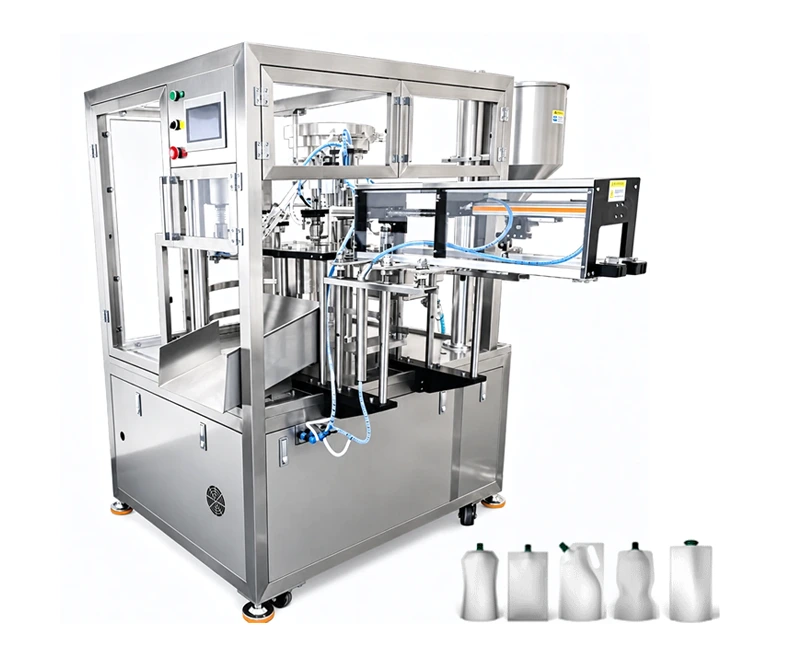
Solution scenario
A food plant engineering, production, and procurement team is assessing a compact process for premade spout pouches: automatic pouch feeding, positioning, metered filling of liquid or paste products, cap placement and capping, then discharge to the next operation. The main reference application is tomato sauce and related tomato products.
Fit conditions
The product is a liquid or paste; the primary reference materials are tomato sauce, tomato paste, and tomato sauce base.
The package is a premade stand-up pouch with a plastic spout. Spout position, pouch loading, and cap compatibility must be checked with samples.
For a center-spout pouch, the documented envelope is 60–240 mm wide and 60–300 mm high. The actual pouch must be confirmed before sizing the machine.
The required fill volume is within the documented 30–2000 ml range, and the required filling-head configuration is defined after product and output review.
The site can provide 220V 50Hz power, grounding, a level installation area, approximately 300 kg of equipment load, and space for pouch loading and finished-pouch discharge.
Process and handoff sequence
- 1
Confirm the product, pouch, spout, cap, fill volume, and target output before selecting the process configuration.
- 2
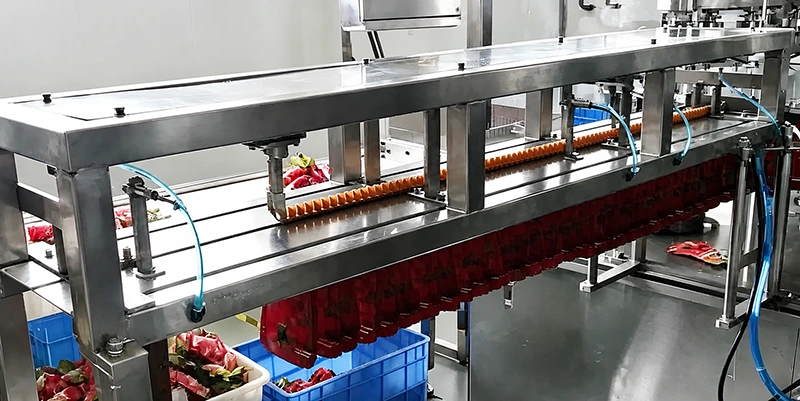
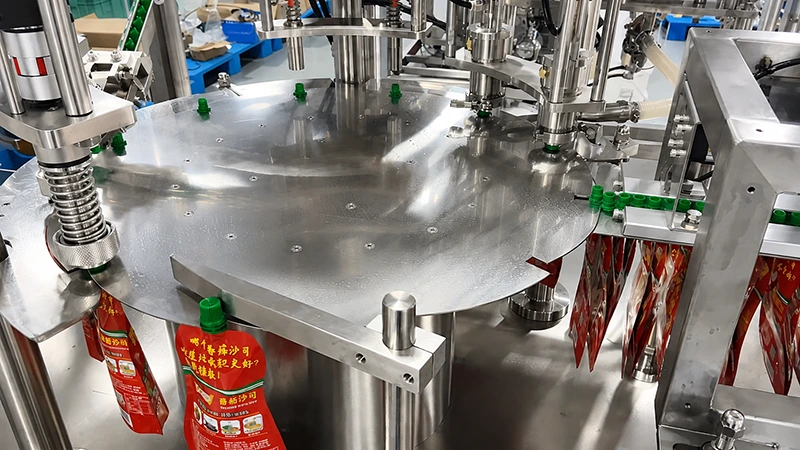
Load a batch of empty premade spout pouches; the feeding mechanism separates the pouches and transfers them to the rotary-table holders.
- 3
The pouch is positioned at the work station. A photoelectric check detects pouch presence and prevents filling when a pouch is absent or not in position.
- 4
The hopper and pump system sends the liquid or paste product through the filling heads into the pouch. Hopper heating, mixing, or holding functions are considered only when required by the product.
- 5
Where included in the selected configuration, the spout is cleaned, the cap is organized and dropped, and the capping mechanism tightens the cap to complete the closure.
- 6
The rotary table transfers the filled and capped pouch to the discharge station, where it moves to the downstream conveyor or the next operation.
Integrated process sequence
SPfill is described as the core machine of a premade spout-pouch filling line rather than an isolated filling station. Its rotary table links pouch feeding, positioning, filling, cap placement, capping, and discharge in one indexed sequence.
The process boundary is suitable for liquid and paste products, with tomato sauce and related tomato products as the main reference. Actual behavior must be checked against product viscosity, fill volume, pouch geometry, and cap design.
Configuration and site interfaces
The documented filling-head options are 2, 4, 8, 10, and 12 heads. Video material also shows a six-head version, so the final head count must be confirmed as standard or customized before quotation and acceptance planning.
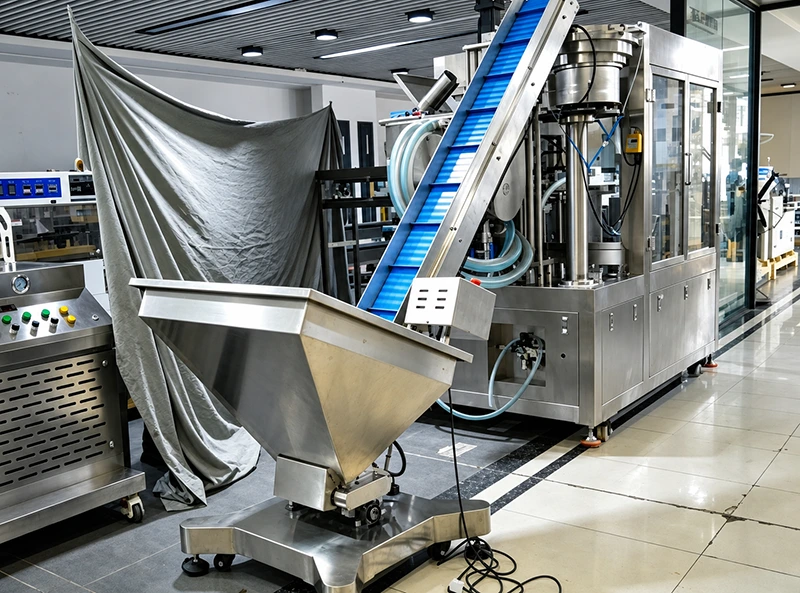
The hopper may be specified with heating, mixing, or holding functions. The product-contact path, pump type, cleaning method, and any coding module should be agreed from the product and hygiene requirements rather than assumed.
The installation review covers 220V 50Hz power, grounding, a level floor, approximately 300 kg equipment weight, pouch loading space, finished-pouch discharge, and connections to upstream or downstream equipment. Pneumatic and control interfaces require project confirmation when optional modules are used.
Validation before configuration and acceptance
Run trials with the actual product and pouch samples. Record fill-volume stability, the response to the no-pouch interlock, pouch positioning, cap placement, capping result, cleaning condition, and discharge transfer.
Acceptance criteria should be set by the engineering and production teams for fill volume, package dimensions, sealing quality, product changeover and cleaning. The current materials do not provide a customer-specific acceptance protocol.
The final technical review should resolve the flagged angled-pouch dimension entry, the six-head configuration status, exact product-contact materials, and the control-system details before the equipment scope is frozen.
Risks to close early
Process speed depends on product viscosity and fill volume; the documented 30–60 pouches per minute range must be checked with the actual product and pouch.
Pouch width, height, spout position, cap geometry, and the tightening interface may affect feeding, positioning, filling, and closure; sample compatibility testing is required.
The specification lists 2, 4, 8, 10, and 12 filling heads, while the video material shows a six-head version; the six-head status is not treated as confirmed standard configuration.
The angled-pouch width entry of 60–3360 mm is flagged in the source as a likely typo and must not be used for sizing until checked against the original material.
Exact product-contact materials, control-system brands, PLC or HMI models, and sensor brands are not fully recorded; confirm them from the BOM and equipment documentation.
Inputs to validate the solution
Product sample and process description: product type, liquid or paste behavior, viscosity range, temperature requirements, and cleaning requirements.
Pouch samples with width, height, spout position, spout and cap specifications, and the required closure method.
Target fill volume, production target, working schedule, and the required filling-head configuration.
Trial records for pouch feeding, positioning, no-pouch filling prevention, filling stability, cap placement, capping, and finished-pouch discharge.
Site data: 220V 50Hz supply, grounding, floor condition, available space, equipment load, pouch loading area, discharge route, and any required pneumatic or control interfaces.
Acceptance requirements for fill volume, package dimensions, closure quality, product changeover, cleaning, and connection to the next operation.
Check pouch and product compatibility
Send the product description, pouch samples or dimensions, fill volume, output target, cap data, and site conditions for an engineering review of the SPfill process.