
Line stage 04

Filling

View the available equipment, field operation, and project handoff conditions for this stage.

Final selection is confirmed against the pack, rate, and adjacent equipment interfaces.

View equipment

Equipment gallery

1 / 3
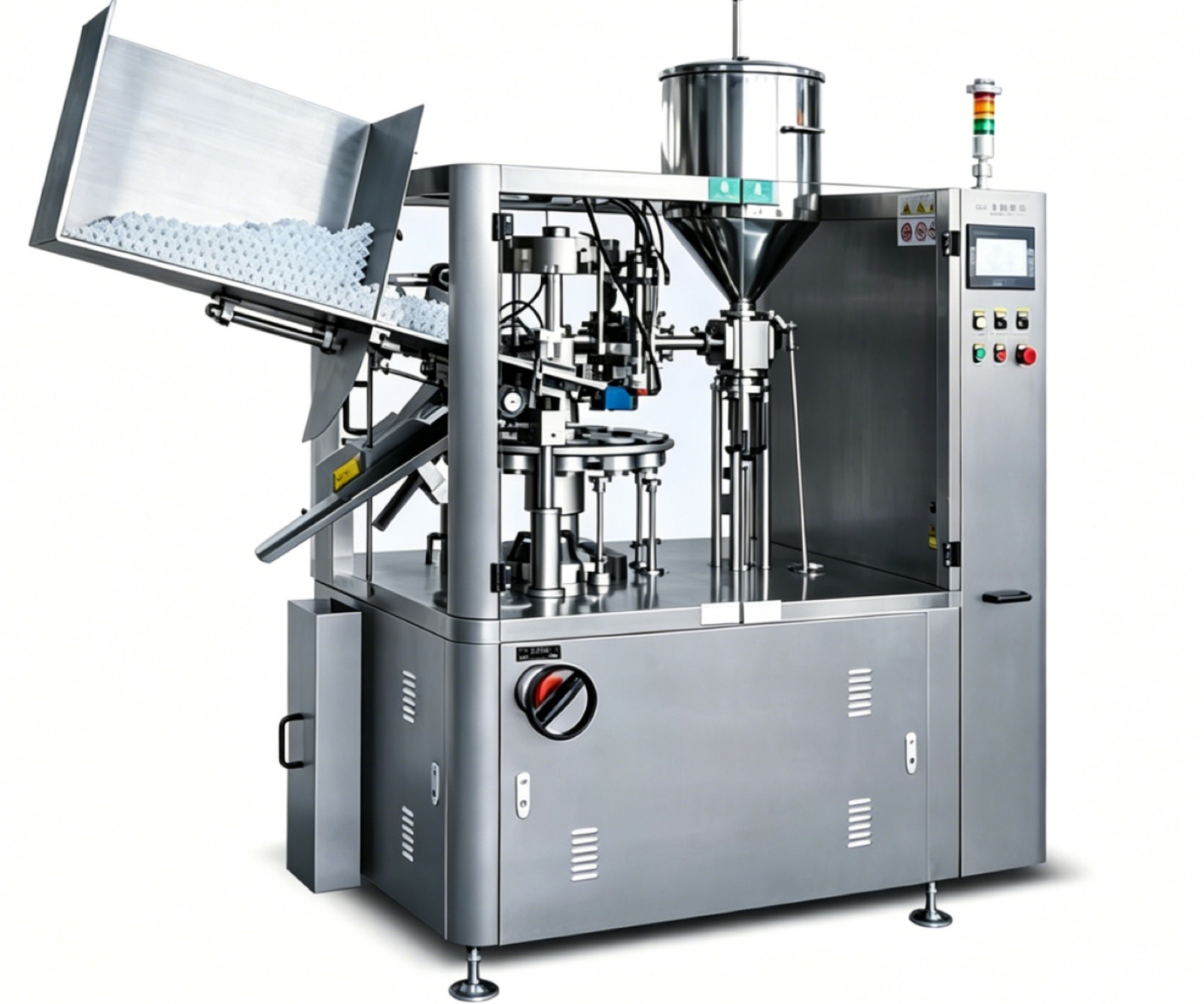
Automatic tube filling and sealing machine

Field video

Field video

Equipment description

For the tube filling and tail-sealing packaging route.

What to confirm for this stage

Send the real product and pack, dose range, finish or pouch/tube dimensions, closure, process temperature, heating and agitation, shift target, and surrounding equipment.

Separate the wording first

These four terms are often used interchangeably, and that shifts the equipment scope.

розлив
The filling action itself: moving product into the container. Its equipment scope takes feed from upstream and hands off to closing downstream.
дозирование
Dosing itself: how the metering unit takes one portion. It is one element of a filling route, not the whole stage.
фасовка
Portioning product into a single saleable or usable pack. Compared with розлив it emphasises turning product into individual packs, and it is common in sachet, spouted-pouch, and bucket projects.
упаковка после розлива
Everything after filling: capping, checkweighing, coding, labeling, sleeve shrinking, collection, case packing, and palletizing. It sits downstream and is not part of this stage.

Routes to compare

Narrow to one or two routes by product form first.

Piston route

Suits smooth or lightly particulate products that need an accurate dose per cycle; metering is done by the metering cylinder and the changeover valve.

Tracking route

The filling heads move with continuously advancing containers; suits products whose flow allows filling while moving and where stopping the container is undesirable.

Rotor-pump route

Treats feed, filling, and low-level behaviour of viscous product as one path; suits low-shear handling of thick sauces and products with soft particles.

Weighing-fill route

Meters by weight; suits large containers such as foodservice or industrial buckets and products with a heavy dose per unit.

Sauce line route

Starts from feed and positioned filling, then adds pre-treatment, heated agitation, and downstream stages as the project requires; suits sauce projects still defining their line scope.

Integrated line route

A bottle line can run from filling through palletizing, while a bucket line is built around weighing, inner and outer lids, and full-bucket handling. Suits new builds or major capacity increases.

What to check for thick or particulate product

These are the things to judge, not conclusions that can be assumed.

  • Flow at process temperature: behaviour at room temperature does not represent behaviour while filling.
  • Largest particle size, firmness, and phase ratio: together these determine the metering method and valve form.
  • Whether the product separates, settles, or foams: this affects whether feed needs agitation and heating.
  • Condition after a stop: skinning, thickening, or setting directly changes how the line restarts.
  • Nozzle shutoff and product on the finish: this decides whether suck-back or a drip tray is needed.
  • Low-level suction, draining, and cleaning: viscous products commonly stall at this point.

Interfaces with adjacent stages

Filling is never a single machine on its own.

  • Upstream: how product is fed (hopper, pipework, any heating) and the handoff orientation and conveyor height from the previous stage.
  • Downstream: the rate and handoff of capping, checkweighing, coding, labeling, sleeve shrinking, and collection.
  • Shared inputs: the real pack and closure samples, minimum and maximum dose, normal and peak targets, existing machine makes and conveyor heights, and a dimensioned layout.
  • Until these are known, the filling stage can only stay at the route-comparison level and cannot be narrowed to a specific configuration.

Confirm the equipment and site interfaces for Filling.

Provide the surrounding equipment, conveyor height, pack samples, target rate, and a dimensioned layout to confirm the actual selection and handoff for this stage.